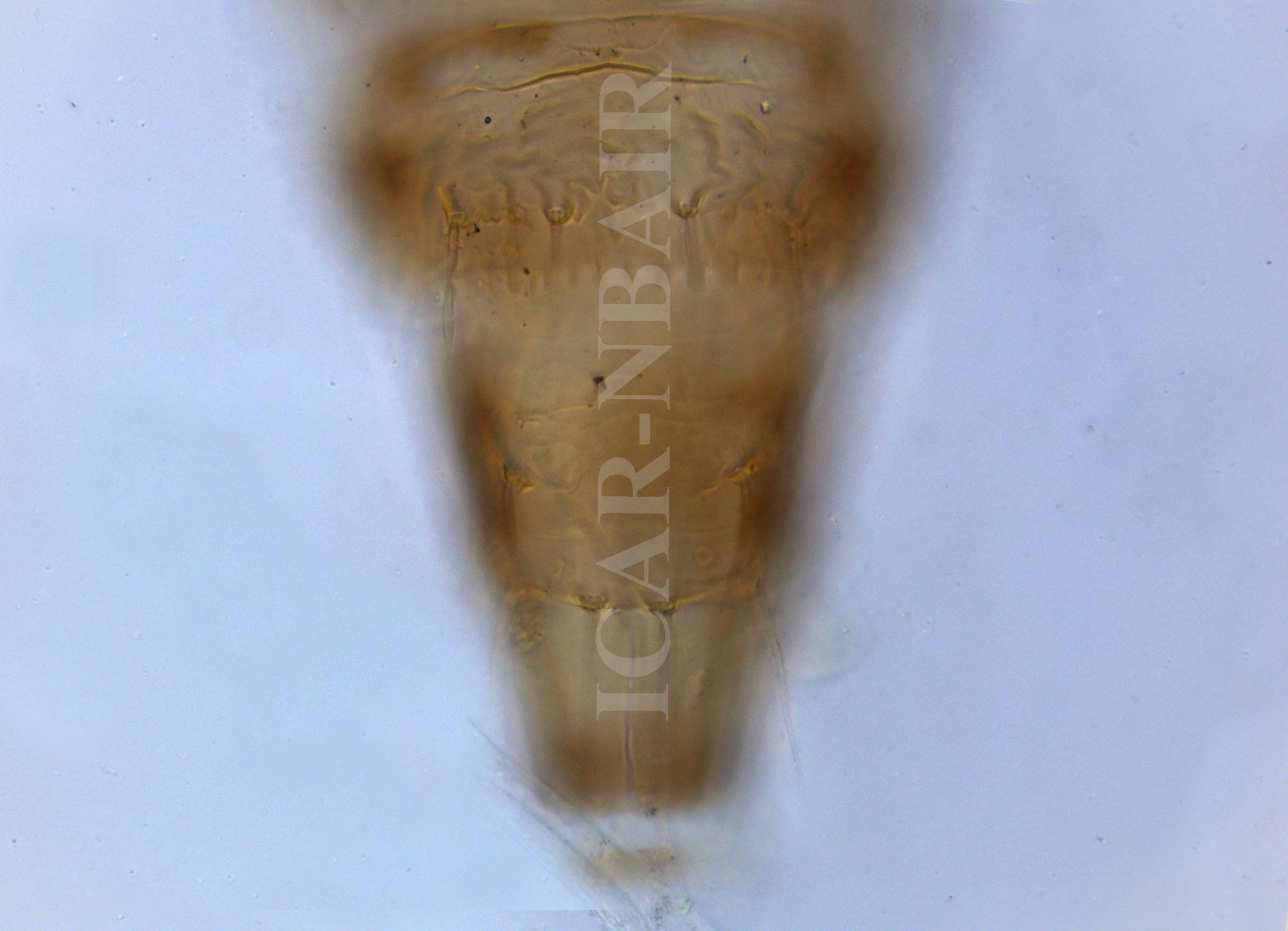
Kurtomathrips morrilli Moulton
Nomenclature
Kurtomathrips morrilli Moulton, 1927: 188
Diagnosis
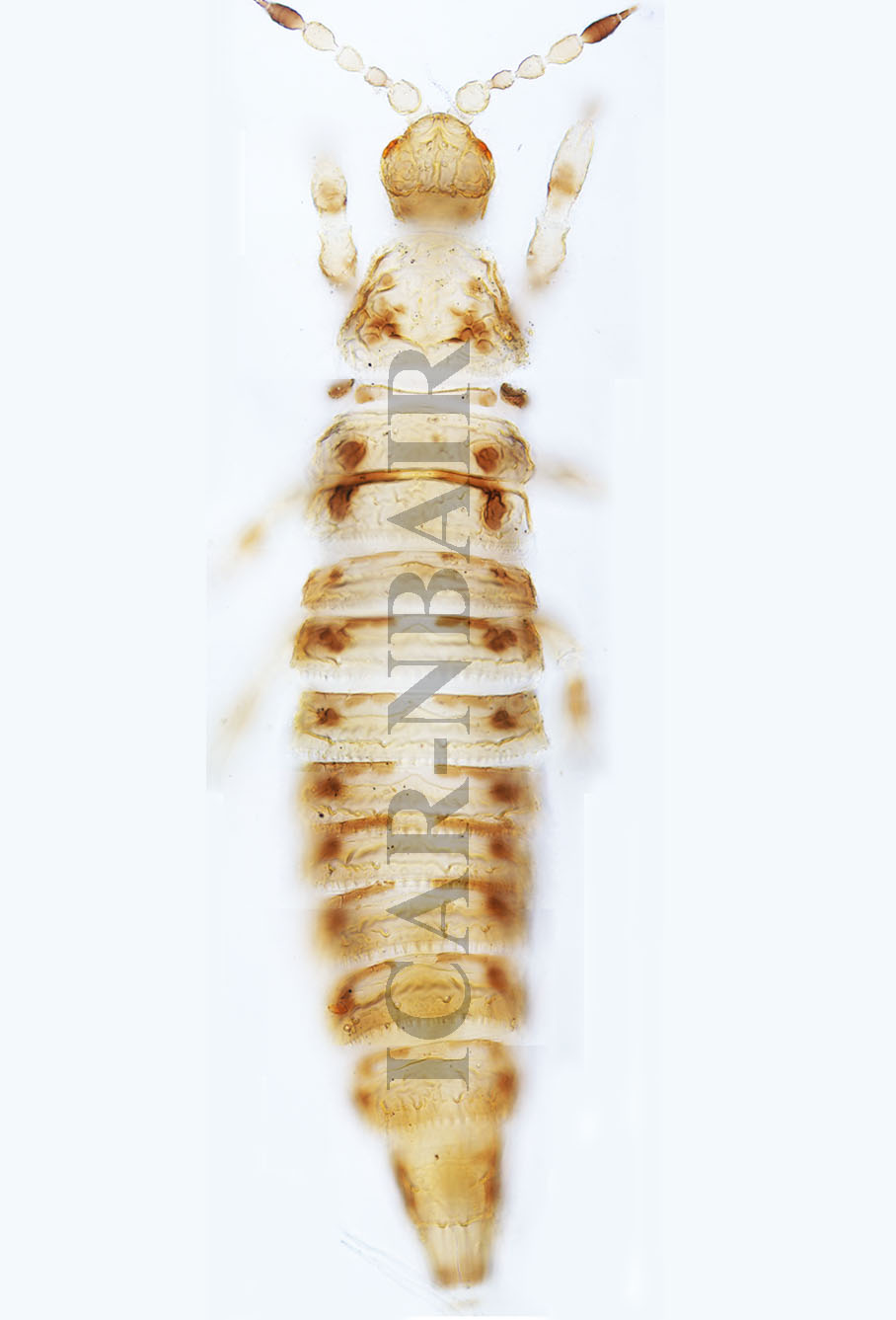
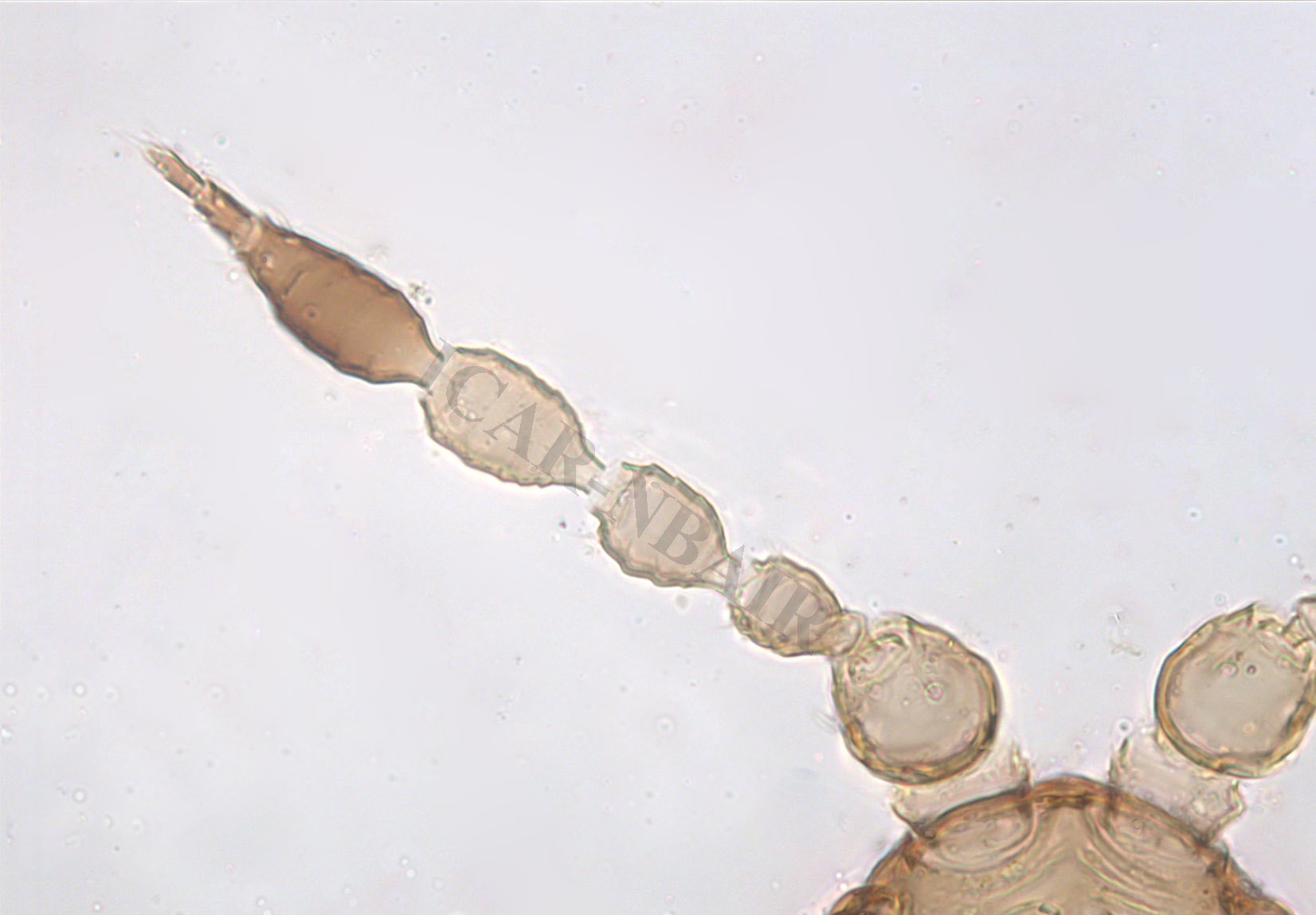
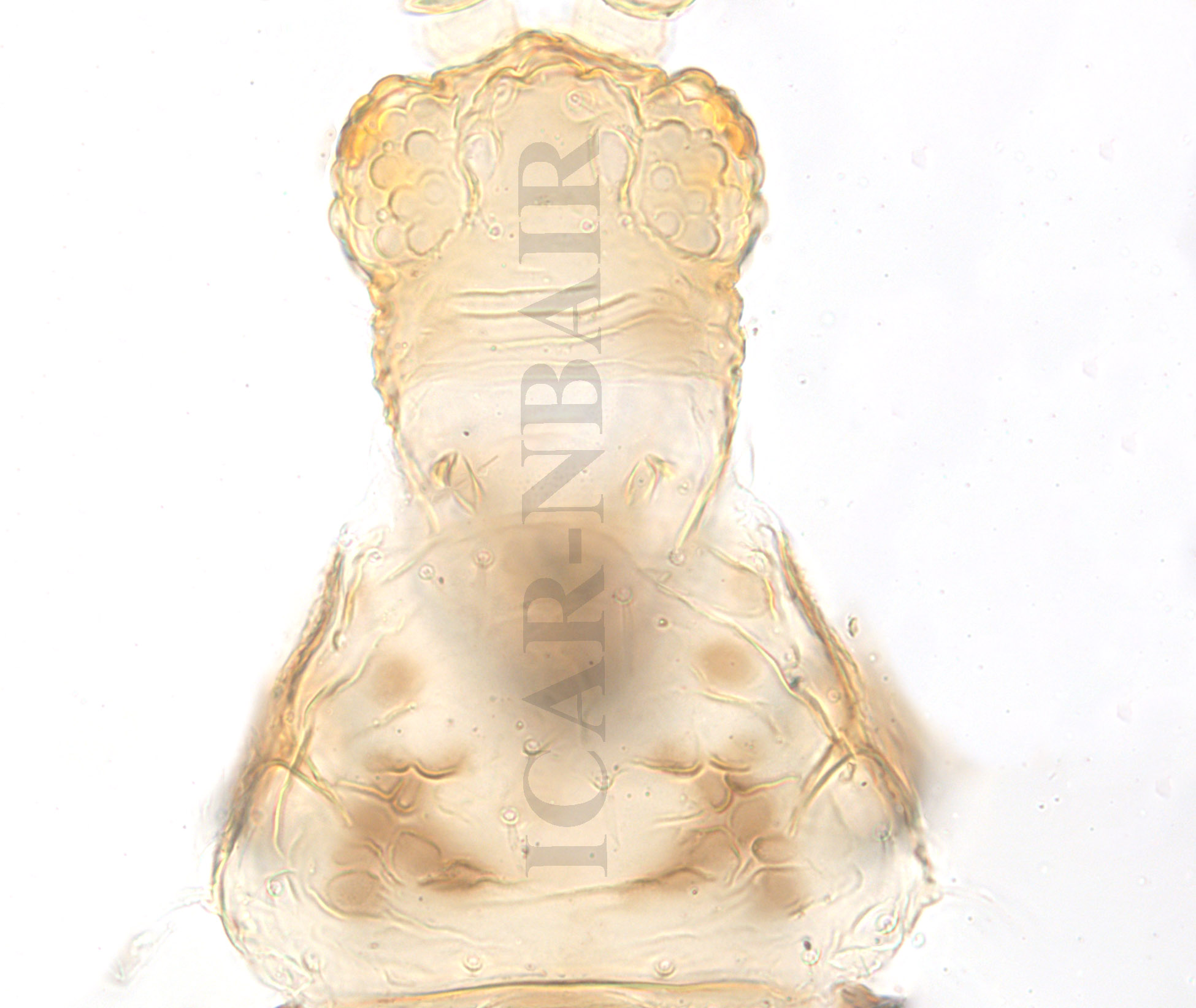
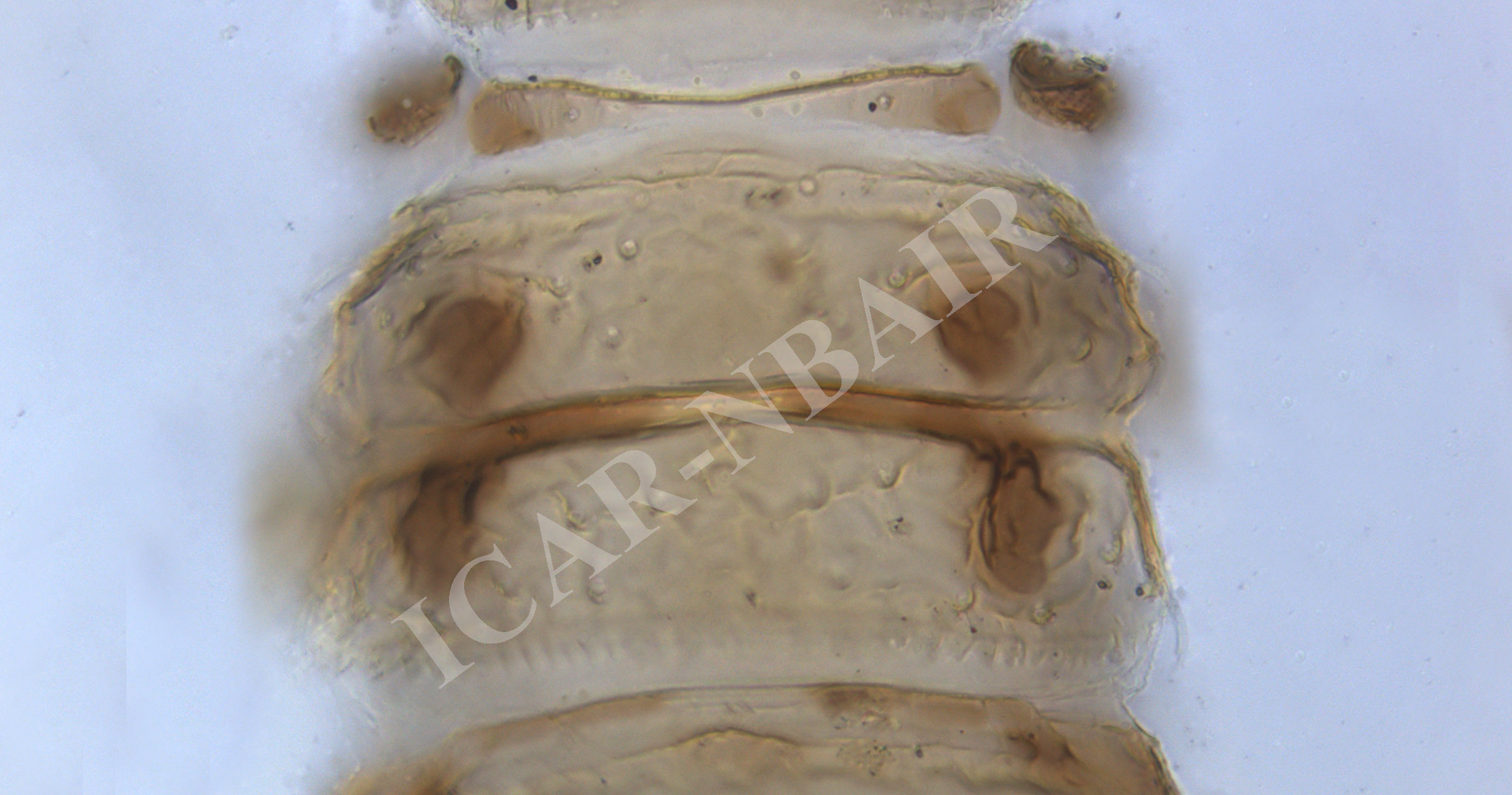
Female aptera: Body yellow, with brown spots. Body with largely expanded distal half and apically pointed major setae. Head with 3 ocellar setae pairs, median broad and abruptly tapered to the apex. Antennae 8 segmented; III without a sense cone; IV with a simple sense cone; V with a single sense cone. Abdominal tergites with lobbed posteromarginal craspedum; median abdominal tergites with a single seta just lateral to the submedian campaniform sensilla, and with 2 major setae pairs. Abdominal tergites I and VIII with significantly enlarged spiracles
specimens collected on
Parthenium hysterophorus (Asteraceae), Syzygium cumini (Myrtaceae) (Bhatti, 1997; Rachana, 2020)
Distribution
Delhi, Karnataka (Bhatti, 1997; Tyagi & Kumar, 2016)
References
Bhatti, J. S., 1997, Thysanoptera. In: Fauna of Delhi, State Fauna Series. Zoological Survey of India, Dehradun, pp. 291–324.
Moulton, D., 1927, Thysanoptera - New species and notes. Bull. Brooklyn Entomol. Soc., 22: 181–202.
Rachana, R. R., 2020, Systematic studies on Terebrantian thrips of Karnataka, India. Ph.D. Thesis, University of Agricultural Sciences, Dharwad.
Tyagi, K. and Kumar, V., 2016, Thrips (Insecta: Thysanoptera) of India – An updated checklist. Halteres., 7: 64–98.