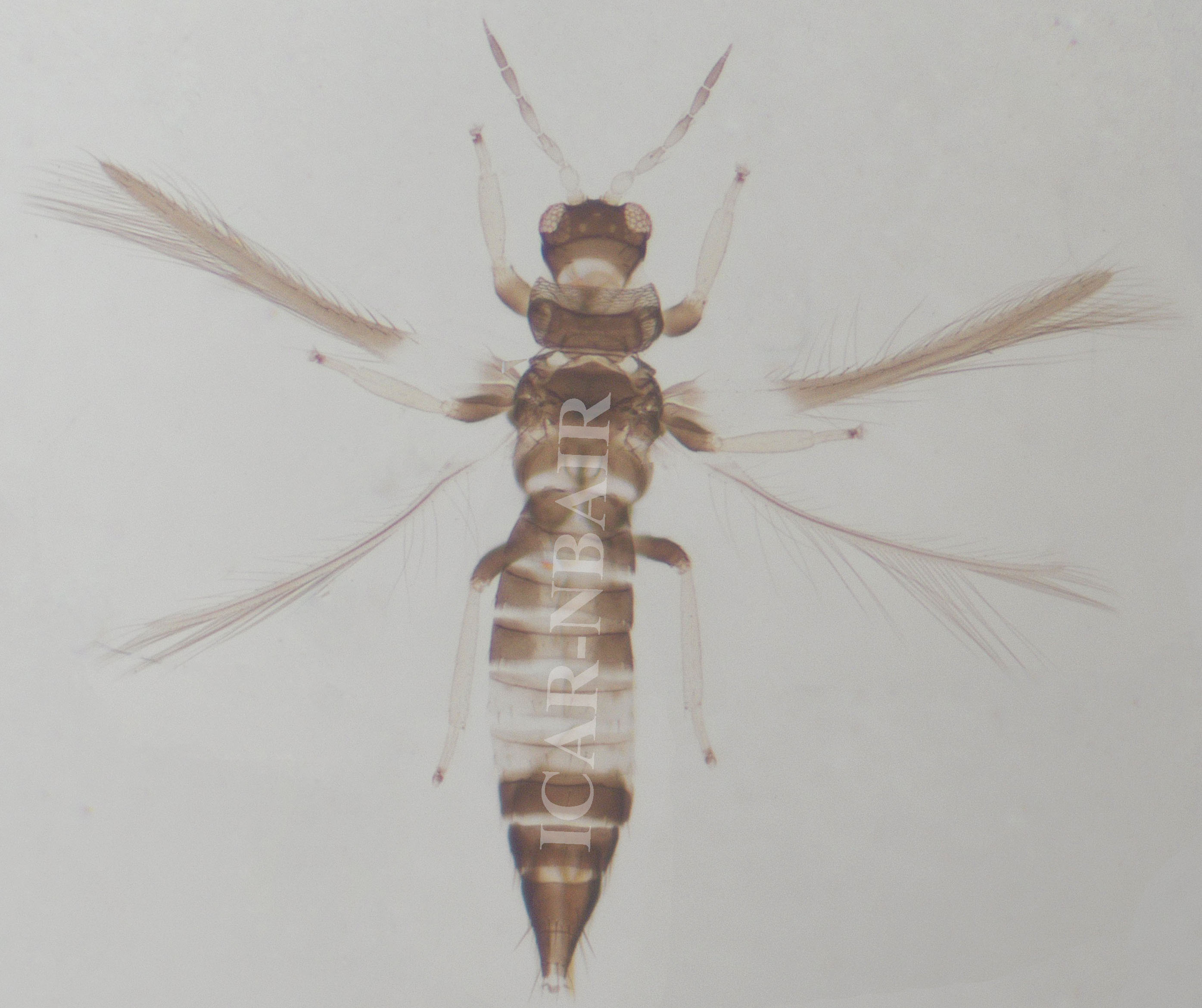
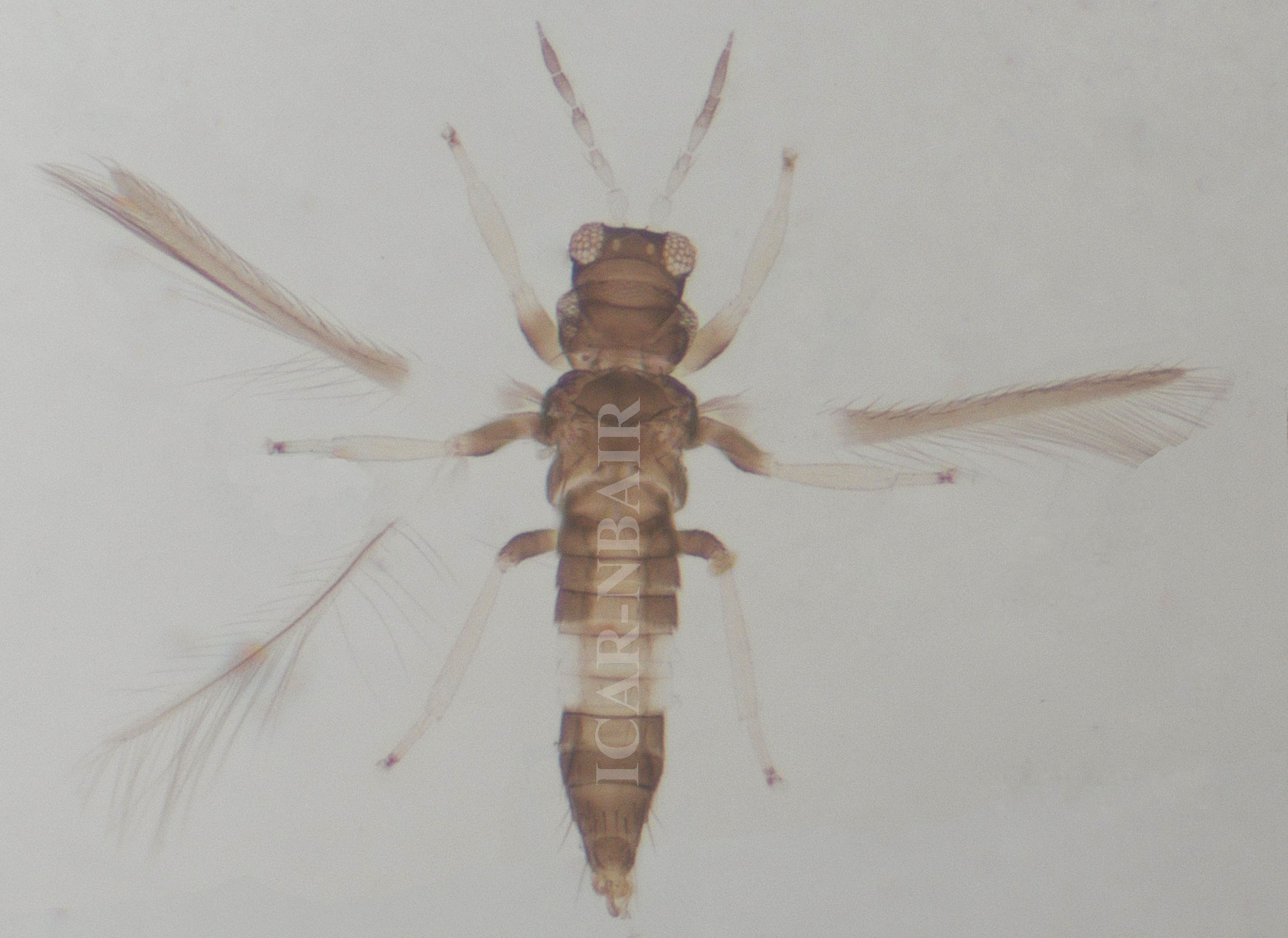
Neohydatothrips flavicingulus Mirab-balou, Tong and Yang
Nomenclature
Neohydatothrips flavicingulus Mirab-balou, Tong and Yang, 2013: 187.
Diagnosis
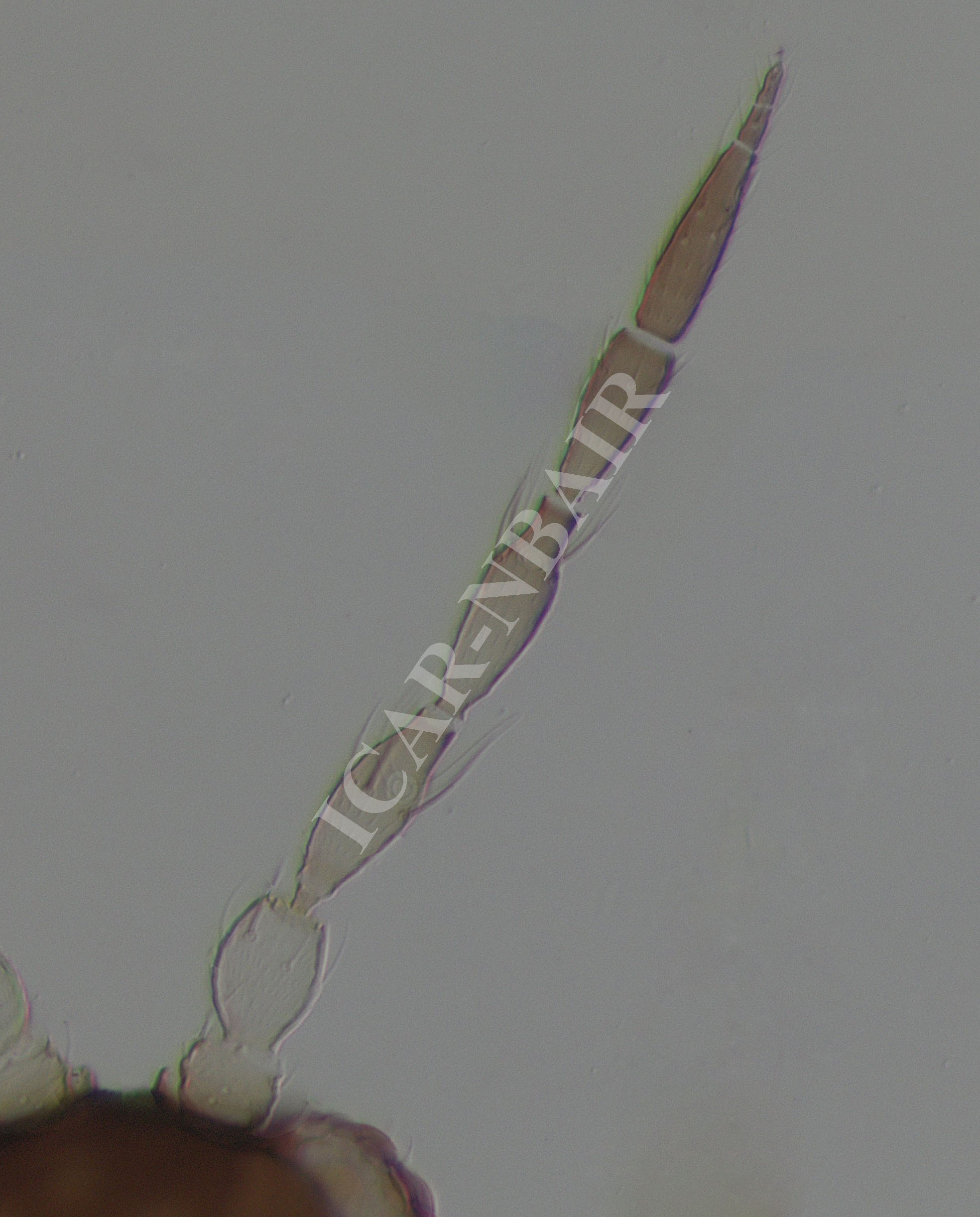
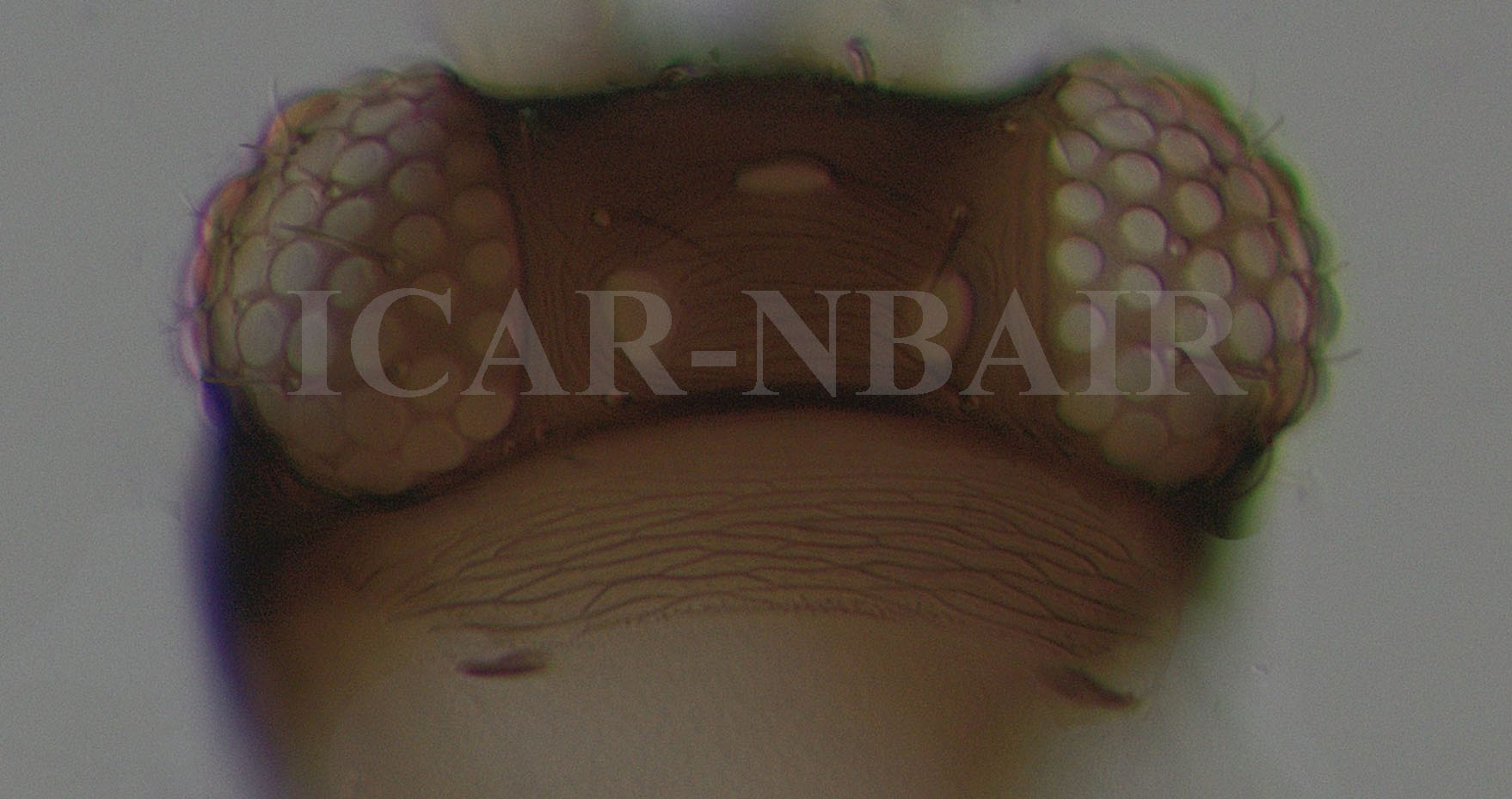
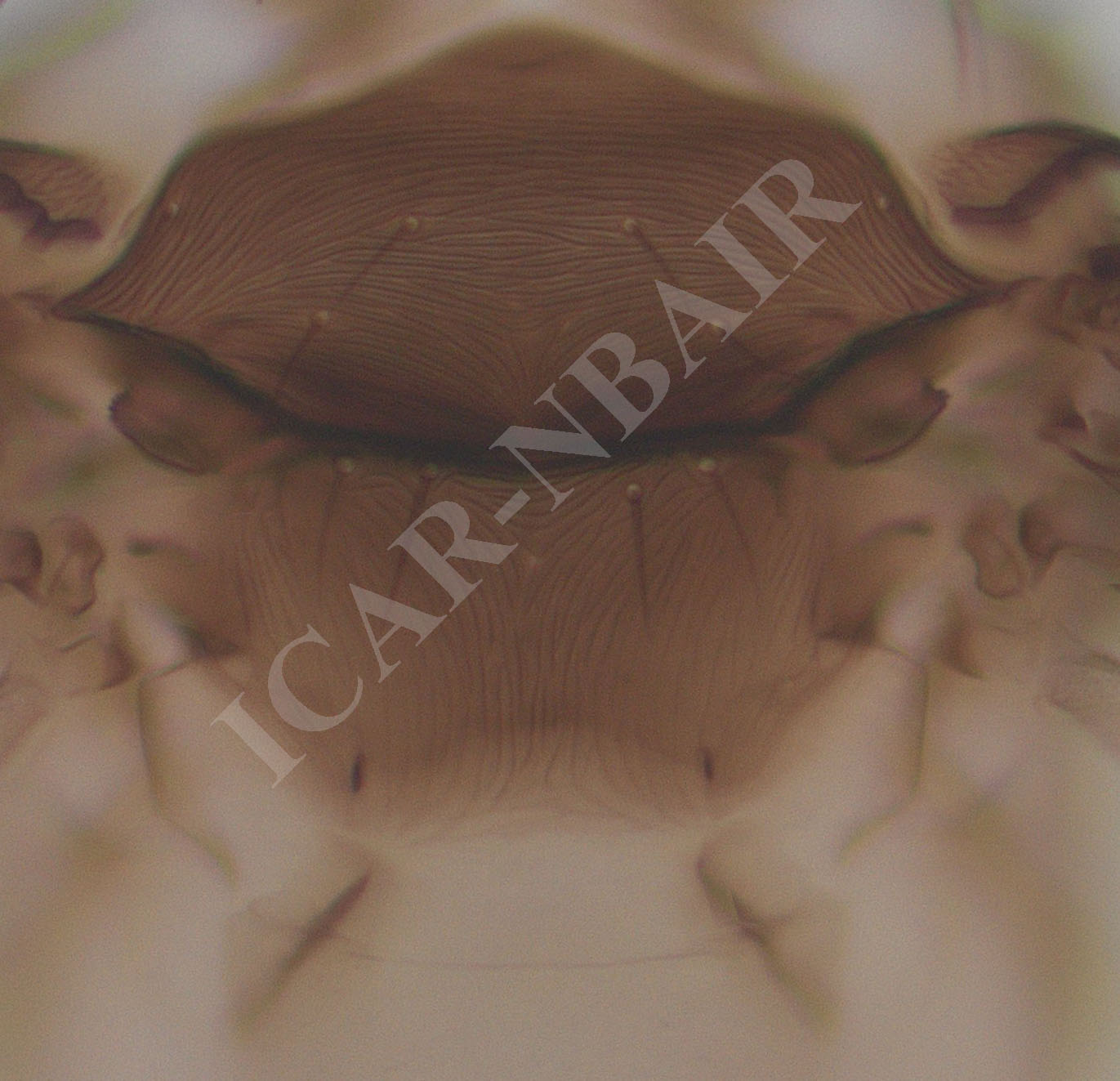
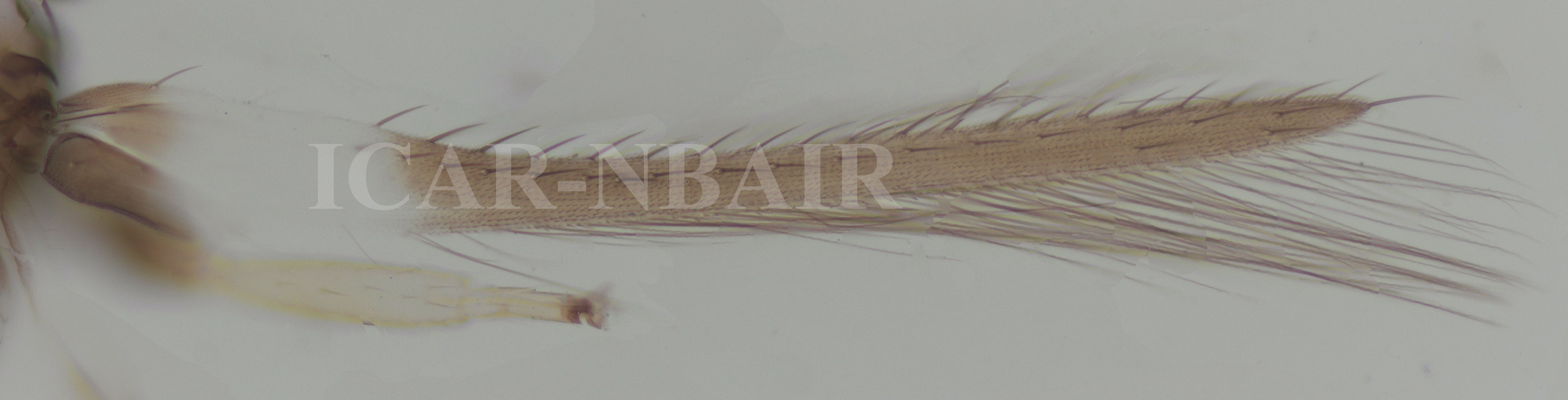
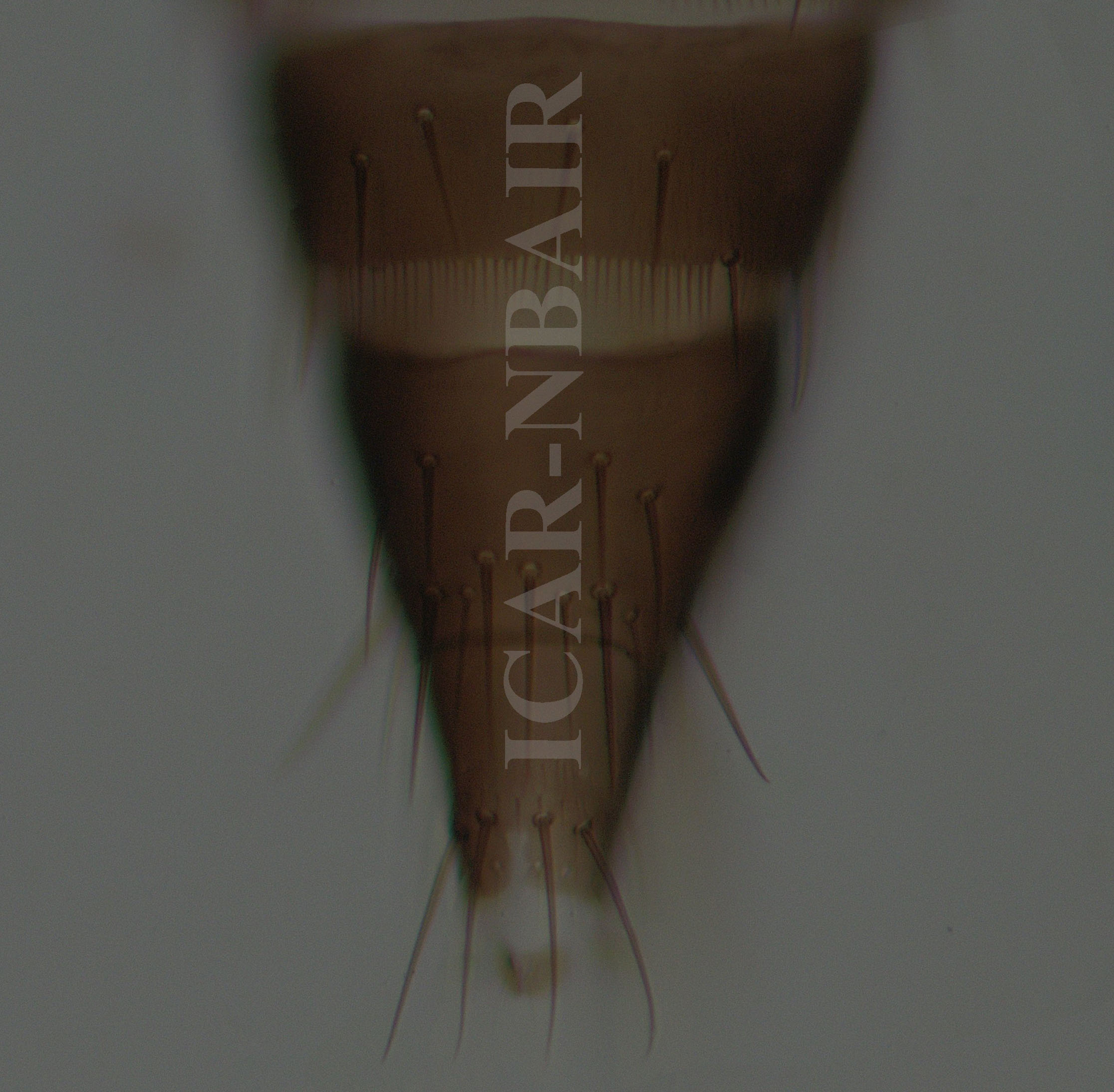
Female macroptera: Body bicoloured. Head dark brown; pronotum and pteronota brown; legs brown, tibiae and tarsi yellow; fore wing brown, pale sub-basal area; abdominal segments I–IV and VII–X brown, V–VI yellow; tergites II–VII with dark antecostal line. Head with occipital apodeme touching posterior eye margin, ocellar setae pair III situated outside ocellar triangle. Antennae 8-segmented. Pronotum transversely reticulate in front of blotch, with internal markings; pronotal blotch transversely striate with internal markings, anterior and posterior margin straight, a pair of long posteroangular setae and one pair of short posteromarginal setae. Metanotum longitudinally reticulate, with small internal markings, median setae at anterior margin, campaniform sensilla absent. Fore wing second vein with 2 distal setae. Abdominal tergites III–VIII with complete row of marginal microtrichia, shorter medially on III–IV; tergites II–VIII with discal microtrichia laterally and extending medially near anterior margin; tergite IX without discal microtrichia; tergite X with discal microtrichia. Sternites without discal setae, sternites VII with three pairs of posteromarginal setae arising in front of posterior margin.
Male macroptera: Similar to female except size. S1 setae as long as S2 on abdominal tergite IX, but positioned anterior to S2; abdominal sternites without pore glands.
specimens collected on
Magnolia champaca (L.) (Magnoliaceae) (Rachana et al., 2025)
Distribution
Maharashtra (Rachana et al., 2025)
References
Mirab-balou, M., Tong, X.L. and Yang, S.L. 2013. Neohydatothrips (Thysanoptera: Thripidae) from China: new species and records, with a key to species. Zootaxa. 3700 (1): 185–194.
Rachana, R.R., Amarendra, B., Girish, K. S., Vanitha, K., Sujith, K.M., Safna, M., Gracy, R.G., Nagarjuna Reddy, K.V., Jayalakshmi, N.H., Berin, P. and Sushil, S.N. 2025. First records of four Thysanoptera species in India and their putative host associations. Oriental Insects. doi: 10.1080/00305316.2025.2497872.