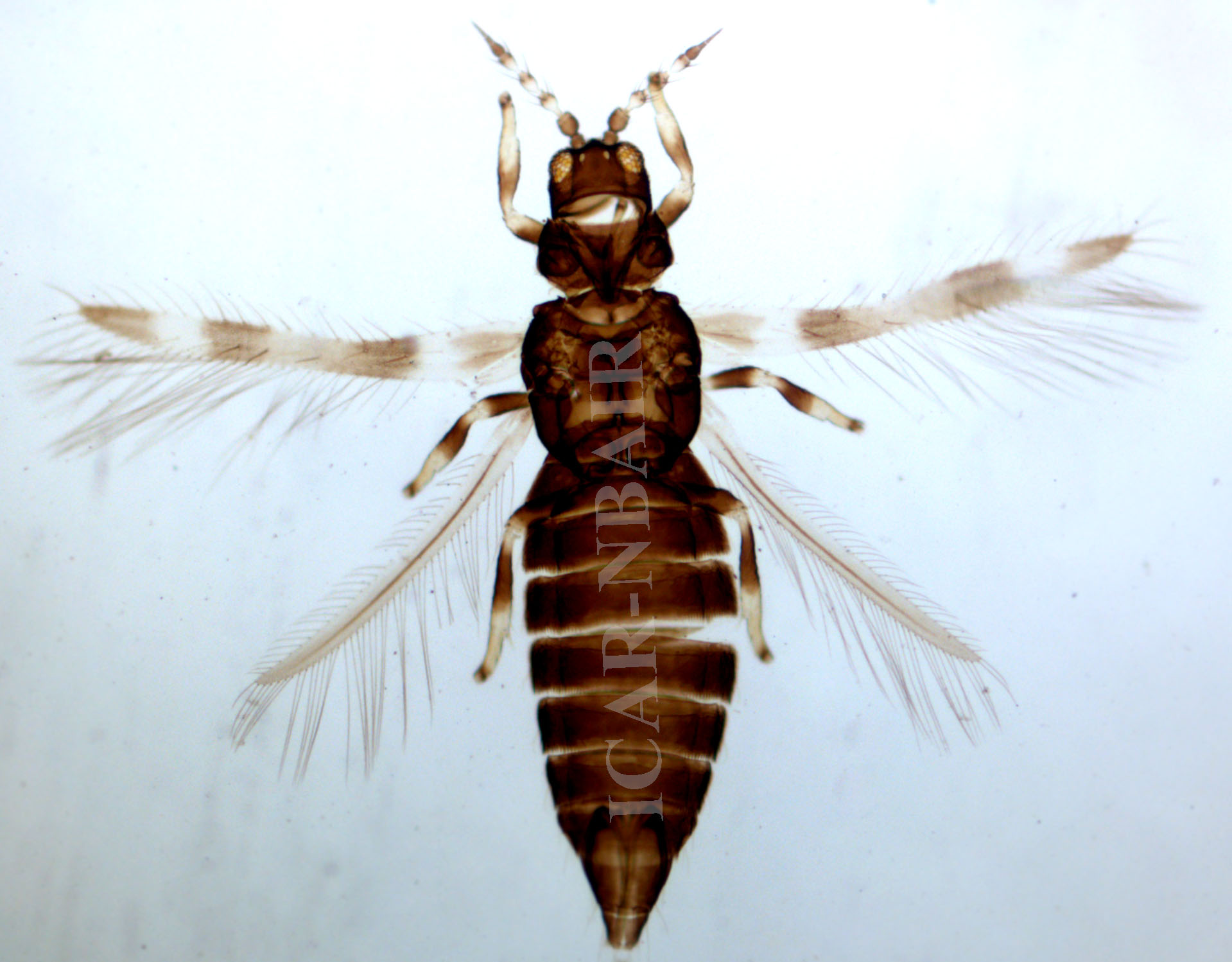
Caliothrips indicus (Bagnall)
Nomenclature
Heliothrips indicus Bagnall, 1913: 291.
Diagnosis
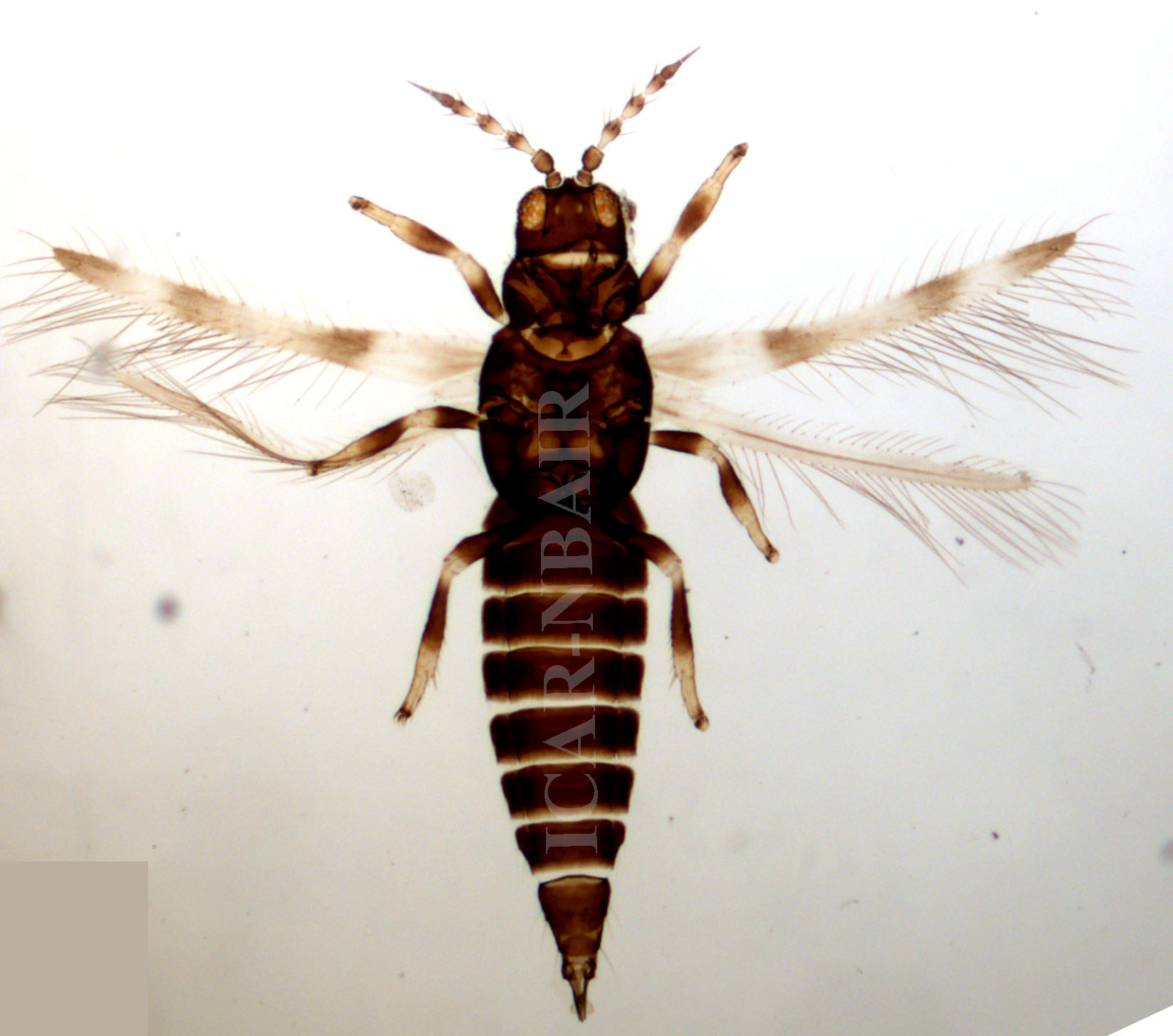
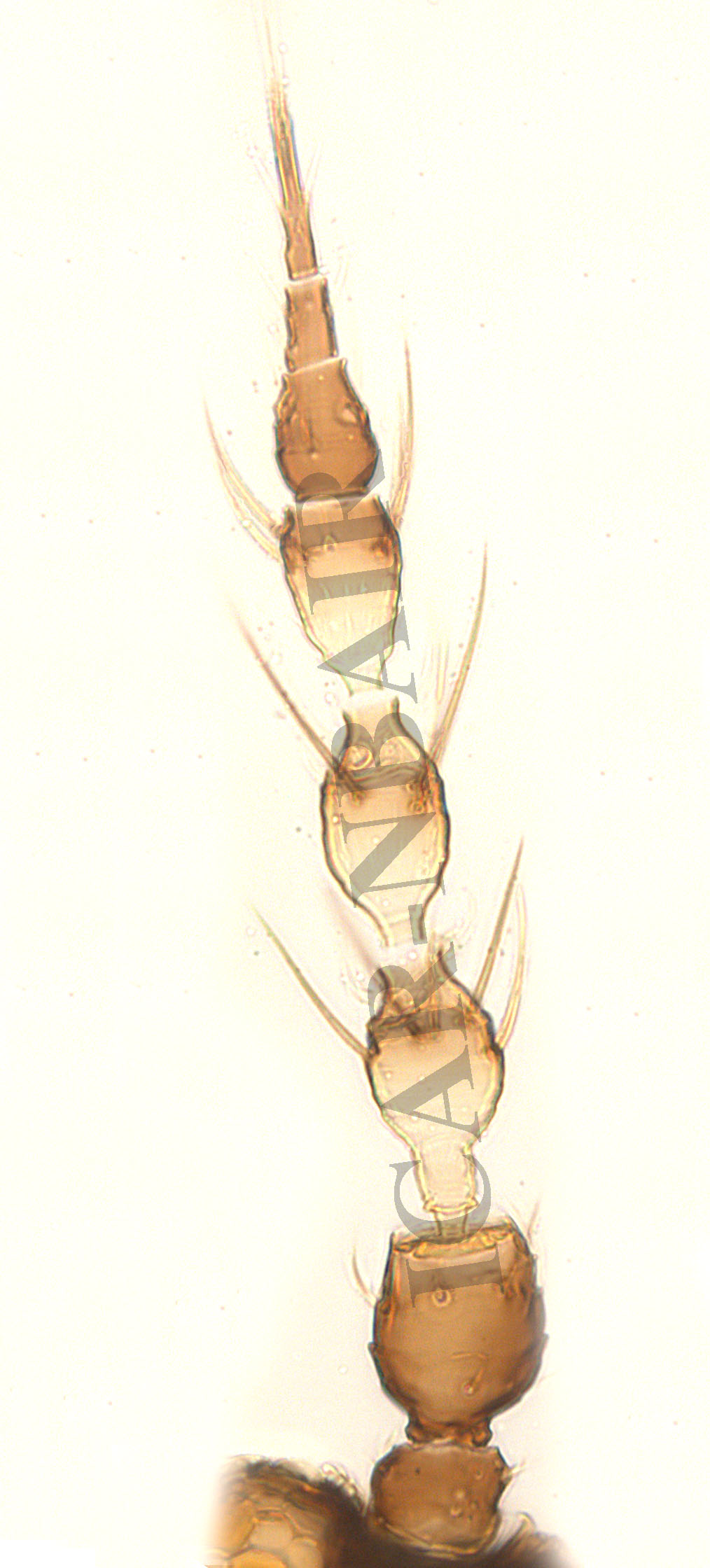
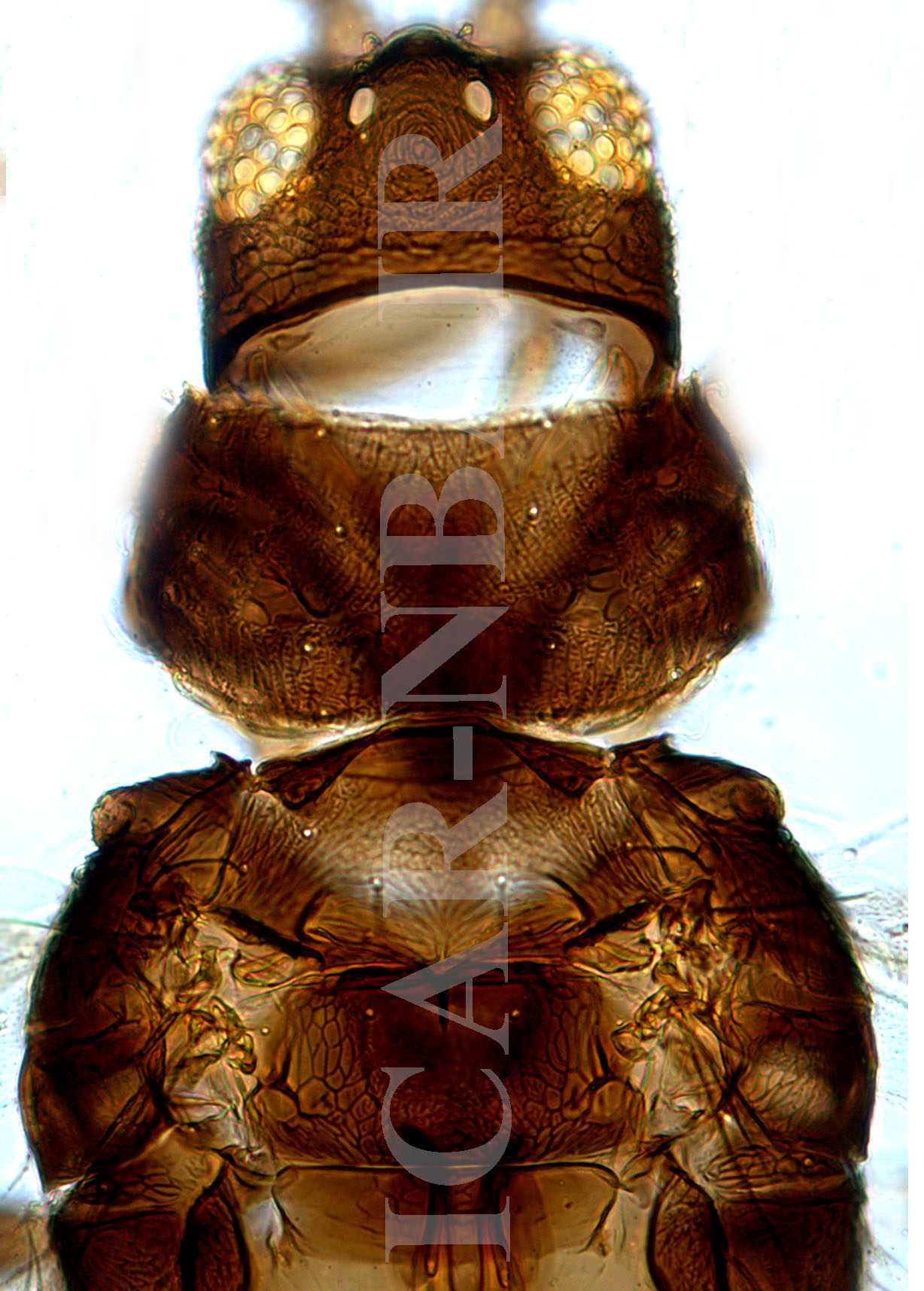
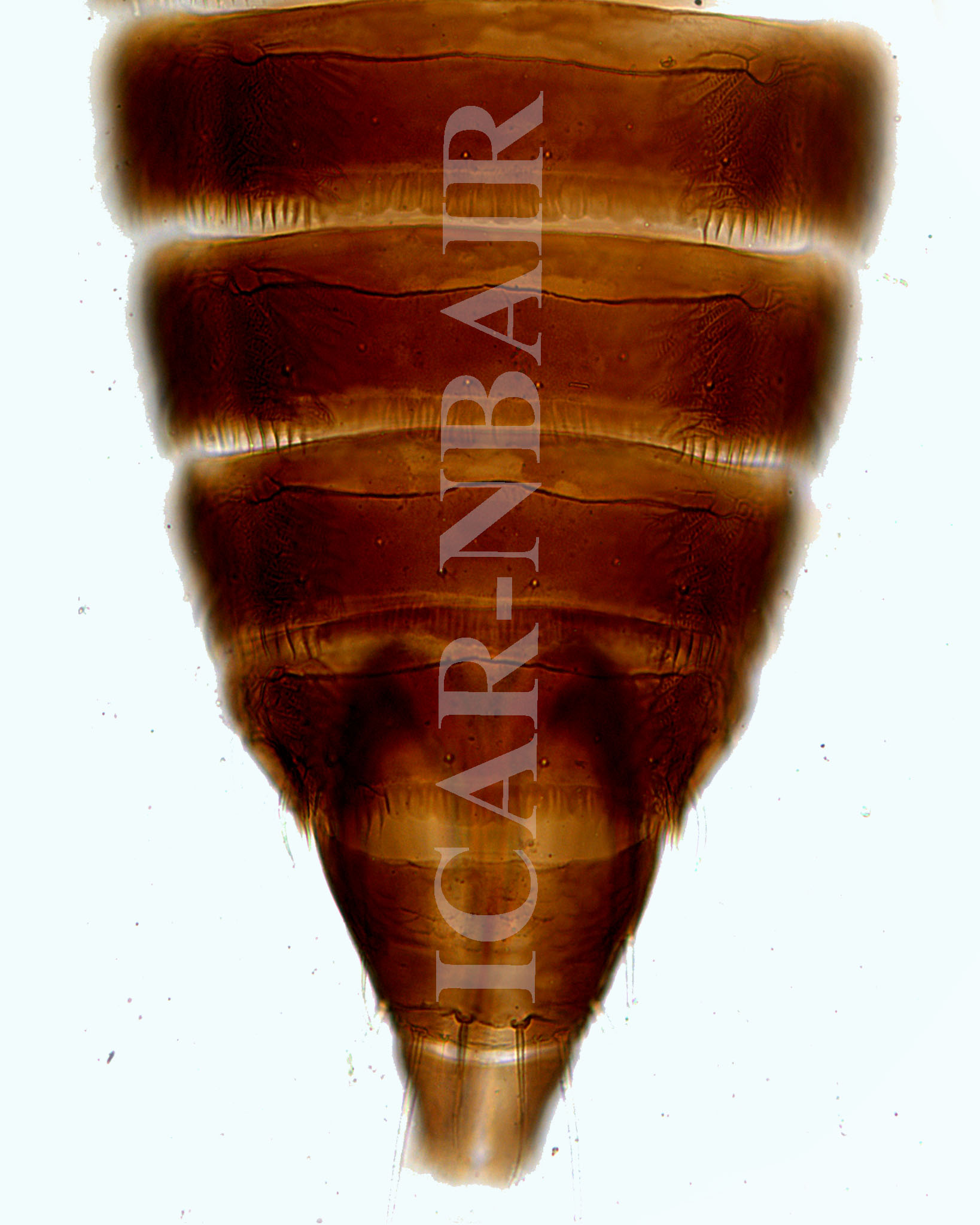
Female macroptera: Body blackish brown. Antennae 8- segmented. Forewing banded, subbasal and subapical band white; apex dark brown. Metanotum reticulate, without wrinkles, rarely a few very weak wrinkles along the anterior margin. Abdominal tergites with lateral sculpture having ill-formed reticules, with wrinkles; II–VII having irregular, incomplete, oblique reticulations on lateral thirds, numerous wrinkles within reticles. Abdominal sternites III–VI with weakly developed reticules on median third, transversely wider.
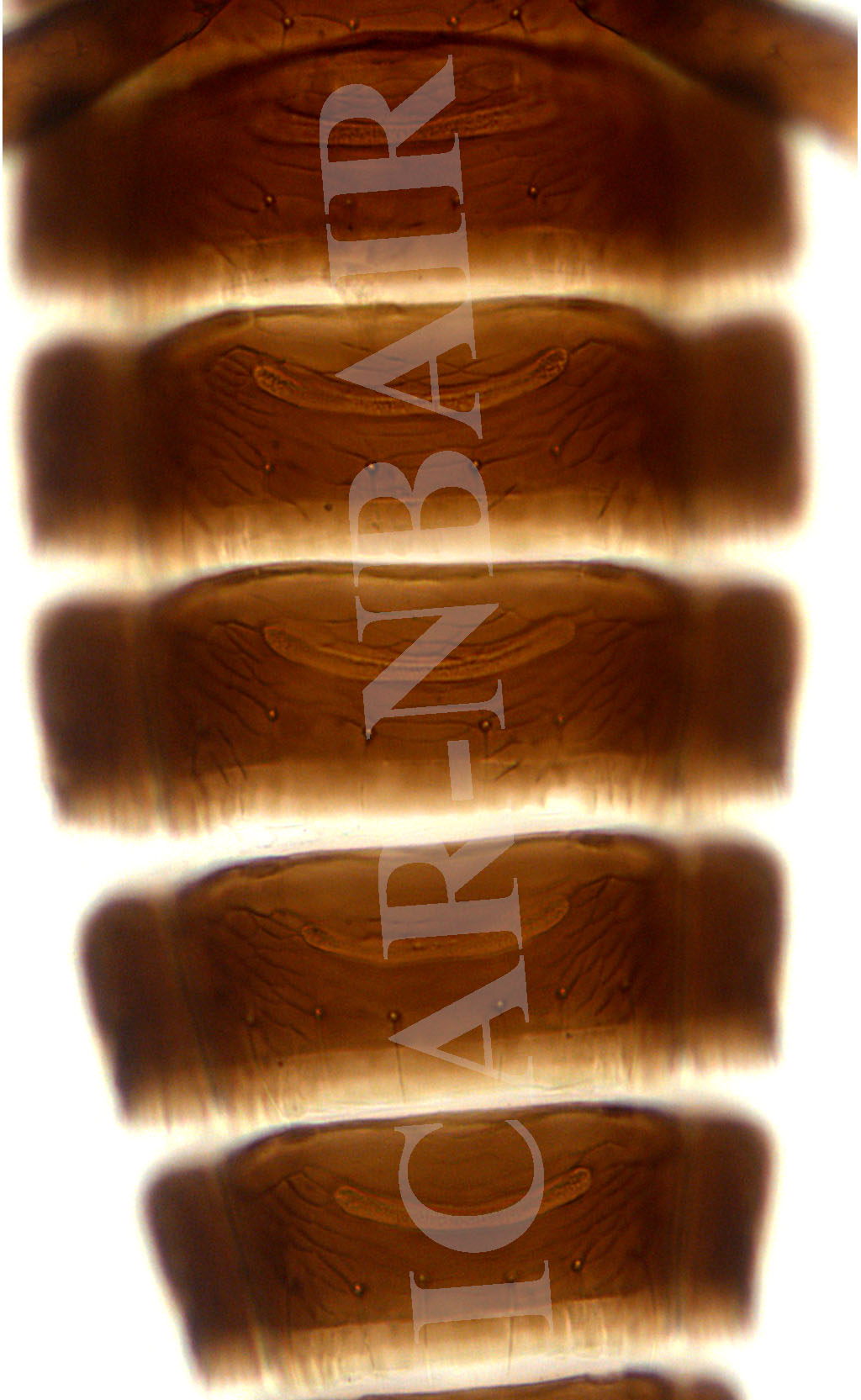
Male macroptera: Similar to female but smaller. Sternites III–VII each with a median broadly transverse, arcuate pore gland.
specimens collected on
Allium cepa (Amaryllidaceae), Arachis hypogaea (Fabaceae), Cannabis sativa (Cannabaceae), Crotalaria juncea (Fabaceae), Indigofera tinctoria (Fabaceae), Phoenix dactylifera (Arecaceae), Solanum melongena (Solanaceae), Tagetes sp. (Asteraceae), Trifolium alexandrinum (Fabaceae), Vigna radiata (Fabaceae) (Ananthakrishnan & Sen, 1980; Bhatti, 1997; Rachana, 2020)
Distribution
Delhi, Karnataka and West Bengal (Ananthakrishnan & Sen, 1980; Tyagi & Kumar, 2016)
References
Ananthakrishnan, T. N. and Sen, S., 1980, Taxonomy of Indian thysanoptera. Zool. Surv. India. (Handb. Ser.)., 1:1–234.
Bagnall, R. S., 1913, Brief descriptions of new Thysanoptera I. Ann. Magazine Natural History, 12 (8): 290–299.
Bhatti, J. S., 1977, The genus Perissothrips in India. Orient. Insects, 11: 567–577.
Rachana, R. R., 2020, Systematic studies on Terebrantian thrips of Karnataka, India. Ph.D. Thesis, University of Agricultural Sciences, Dharwad.
Tyagi, K. and Kumar, V., 2016, Thrips (Insecta: Thysanoptera) of India – An updated checklist. Halteres., 7: 64–98.