
ICAR - NATIONAL BUREAU OF AGRICULTURAL INSECT RESOURCES
BIPM IN RICE
Pest Name : White Backed Plant
Sogatella furcifera (Horvath)
White Backed Plant Hopper (WBPH) is monophagous. Feeds mostly on cultivated (Oriza sativa L.) or wild rice species. However, WBPH could feed on several grass species such as Leersia hexandra Sw.(cut grass), Choris barbata, Paspalum distichum (knotgrass), Brachiaria mutica (Paragrass), Echinocloa crusgalli (barnyard millet), Cyperus difformis (sedge), Eleusine indica(Indian goose grass), Dinebra sp. (viper grass), Leptochloa chinensis and Digitaria ciliaris (crab grass).
White Backed Plant Hopper occurs in all rice environments and is distributed widely in Asian countries, Australasia, and the Pacific Islands. WBPH is not found in America and Africa.
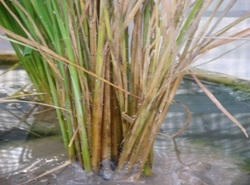
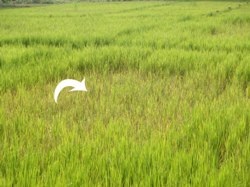
White Backed Plant Hopper (WBPH) is one of the most important sucking pests of rice crop. WBPH is found on the upper portion of the stems, with the majority at the junction between leaves and stems. WBPH feeds on the phloem and causes decrease in leaf area, plant height, dry weight, leaf and stem nitrogen concentration, chlorophyll contents and photosynthetic rate, which subsequently results in yield losses. In addition, both adults and nymphs while sucking the sap inject their toxic saliva into the plant which produces “hopper burn” resulting in drying of leaves and tillers. WBPH under favourable conditions can cause 35-95% yield loss. Rice is more sensitive to attack at the tillering phase than at the boot and heading stages. Gravid females cause ovipositional punctures in leaf sheaths.
Visitors :
(c) ICAR-National Bureau of Agricultural Insect Resources.
