
ICAR - NATIONAL BUREAU OF AGRICULTURAL INSECT RESOURCES
BIPM IN RICE
Biology
Females lay eggs in groups by inserting in plant tissue with the ovipositor. In most cases, eggs are thrust in a straight line generally along the mid-region of the leaf sheath. Sometimes eggs are laid in clusters of 4-10 in longitudinal rows within the leaf midribs. Newly laid eggs are whitish and turn darker prior to hatching. A red eye spot appears towards the egg maturation stage. Egg period varies from 7 to 10 days depending on temperature.
The newly hatched first-instar nymph is white and turns strongly mottled dark grey or black and white in color and are devoid of functional wings. Wing buds appear during the fifth instar. The nymphal stage passes through 5 instars and takes 12 to 17 days in the temperature range of 20-30°C to complete development
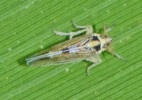
Adult male and female moths exhibit two winged forms depending on the stage of crop and crowding density. Short winged or brachypterous sedentary forms are mostly found settled on infested plants during seedling, panicle initiation and dough stages. Long winged or macropterous forms are found at the time of crop maturity and take to flight (migrate). The short winged adult females exhibit higher fecundity compared to the migratory long-winged forms. Macropterous adults can migrate over long distances to find a new favourable habitat. Adult longevity in general varies from 10 to 20 days depending on temperature.
Visitors :
(c) ICAR-National Bureau of Agricultural Insect Resources.
