
ICAR - NATIONAL BUREAU OF AGRICULTURAL INSECT RESOURCES
BIPM IN COCONUT
Pest Name : Eriophyid mite
Aceria guerreronis (Eriophyidae : Acari)
It is an invasive pest and introduced in India during 1998. It occurs across the coconut growing regions in India.
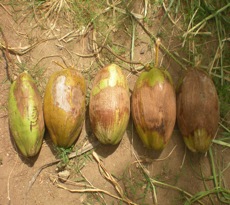
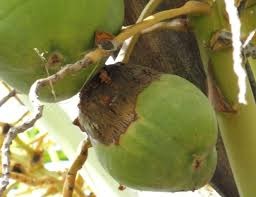
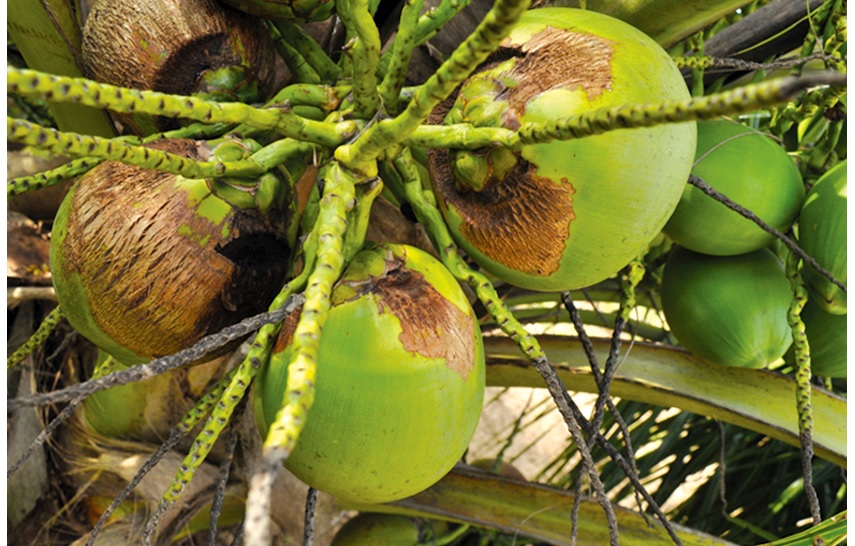
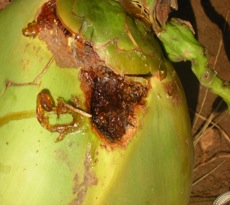
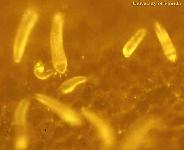
Mites are usually found under the bracts of fertilized female flowers and do not infest the unfertilized flowers. This mite is very minute in size measuring 200 – 250 micron in length and 36 – 52 micron in width with two pairs of legs. The female mite has high fecundity and lays about 100-150 eggs during its lifetime. The eggs are ovoid, translucent, glassy and having a measure of 35 microns in diameter. Various stages of the mites are seen in the floral bracts and the tender meristematic portion of the developing nuts. Nymph and adult are pale in colour with elongate body and worm like appearance. The life cycle of this mite, which consists of egg, two larval instars and an adult stage, is completed in 7 -10 days. The adults move out of the perianth when population increases. Dispersal of the mite in nature takes place mainly through the wind. Honey bees, other insects and birds visiting inflorescence of coconut also act as agents for dispersal. The mite is persistent throughout the year with maximum pest population during dry/ summer months from March to May. A period of high temperature with intermittent rains causing high humidity favours higher multiplication and rapid spread of the mite.

Visitors :
Developed by: Dr. M. Pratheepa, Dr. K. Subaharn, Dr. Richa Varshney & Dr. T. Venkatesan
(c) ICAR-National Bureau of Agricultural Insect Resources.
