Bakanae Disease or Foot Rot


Gibberella Fujikuroi


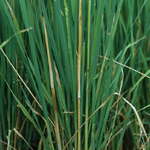
  • Infected plants several inches taller than normal plants in seedbed and field
  • Thin plants with yellowish green leaves and pale green flag leaves
  • Drying seedlings at early tillering
  • Reduced tillering and drying leaves at late infection
  • Partially filled grains, sterile, or empty grains for surviving plant at maturity
  • In the seedbed, infected seedlings with lesions on roots die which may die before or after transplanting

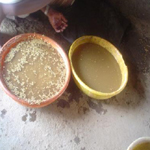
separation of chaffy seeds using salt water.


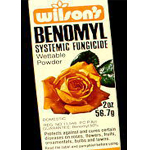
Benomyl


  • The pathogen sexually produces ascospores that are formed within a sac known as ascus.
  • The asci are cylindrical, piston-shaped, flattened above, and are 90-102 x 7-9 µm. They are 4- to 6-spored but seldom 8-spored.
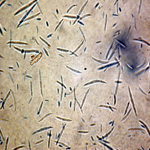
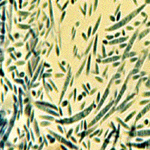
  • Hyphae are branched and septate. The fungus has micro- and macroconidiophores bearing micro- and macroconidia, respectively.
  • The sclerotia are 80 x 100 µm. They are dark blue and spherical. The stroma are more or less plectenchymatous and yellowish, brownish, or violet.

gibberella fujikorai conidium.


micro and macro conidia of bakane disease.


  • Clean seeds should be used to minimize the occurrence of the disease.
  • Salt water can be used to separate lightweight, infected seeds from seed lots and thereby reduce seedborne inoculum.
  • Seed treatment using fungicides such as thiram, thiophanate-methyl, or benomyl is effective before planting.
  • Benomyl or benomyl-t at 1-2% of seed weight should be used for dry seed coating.
  • Seed treatment with organo mercurials - Agrosan GN, Ceresan @ 2 g a.i./kg seed is highly effective; steeping seeds in 1% CuSO4 solution or 2% formalin also recommended.

Benomyl


separation of chaffy seeds using salt water.