
ICAR - NATIONAL BUREAU OF AGRICULTURAL INSECT RESOURCES
BIPM IN RICE
Biology
Females lay eggs by penetrating plant tissue with the ovipositor where eggs are laid in group of 2 to 12, mainly in leaf sheaths, but also in the leaf blade. Newly laid eggs are whitish and turn darker before hatching. Egg period varies from 7 to 11 days depending on temperatures in the optimum temperature range of 20-30°C. Prevailing temperatures shortly after adult emergence influence oviposition of macropterous females. Short winged adult morphs lay more eggs than macropterous forms.
Freshly hatched nymph is cottony white, 0.6 mm long and it turns purple-brown, 3.0 mm long in the fifth instar. Nymphs have a similar appearance to adults but are smaller, have different coloration, and are devoid of functional wings. Wing buds appear during the fifth instar. The nymphal stage passes through 5 instars and takes 10 to 15 days in the temperature range of 20-30°C to complete development.
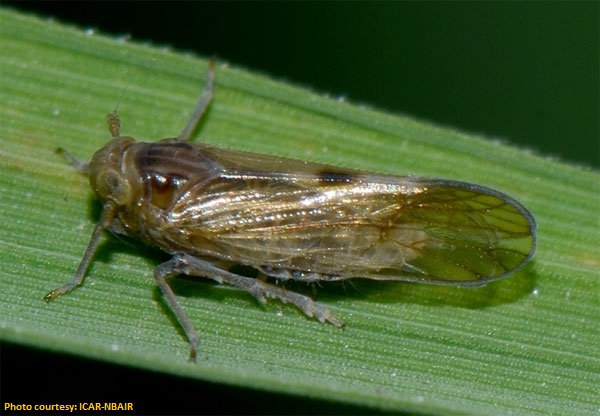
The adult stage is dimorphic i.e., two morphotypes, one with long forewings (macropterous) and the other with short wings (brachypterous). In females, crowding promotes frequency of macropterous forms. In males, a moderate nymphal density promotes brachypterous forms. The short winged brachypterous adults exhibit high fecundity, while the long winged macropterous adults can migrate over long distances. Adult longevity varies from 10-20 days depending on temperature.
Visitors :
(c) ICAR-National Bureau of Agricultural Insect Resources.
