ICAR - NATIONAL BUREAU OF AGRICULTURAL INSECT RESOURCES
BIPM IN RICE
Home
About
Credits
Contact Us
Back
Ragged stunt virus
Symptoms
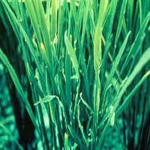
Infected plants severely stunted during early growth stages of the crop
Leaves short and dark green with serrated edges
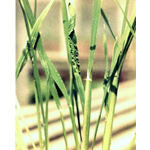
Leaf blades twisted at the apex or base, which result in the spiral shape of the leaves
Leaf edges uneven and the twisting give the leaves a ragged appearance
Ragged portions of the leaves are yellow to yellow-brown
Vein swellings develop on the leaf blades and sheaths
Swellings pale yellow or white to dark brown
Flag leaves twisted, malformed, and shortened at booting stage
Flowering is delayed
Incomplete panicle emergence
Nodal branches produced at upper nodes
Partially exserted panicles and unfilled grains
Ragged stunt virus
Rice ragged stunt disease
Identification of the pathogen
The brown planthopper transmits the disease.
The early instar nymphs of the insect are more efficient in transmitting the disease than older ones.
Five-day-old nymphs are the most efficient transmitters.
The virus is acquired within a feeding period of 24 hours.
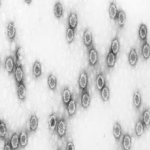
Viral particles are 63-65 nm in diameter and consist of five proteins.
They are mostly found in phloem and gall cells.
The genome consists of ten double-stranded RNA segments.
The virus is circulative and propagative in the insect vectors.
Ragged stunt casual virus
Management Strategies
Avoid close planting and provide 30 cm rogue spacing at every 2.5 to 3.0 m to reduce the pest incidence.
There are varieties released by IRRI, which contain genes for BPH resistance, like IR26, IR64, IR36, IR56, and IR72.
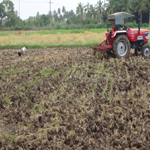
plouging and harrowing the field to destroy stubbles right after harvest in order to eradicate other hosts.
Apply any one of the following to control vector BPH:
Phosphamidon 40 SL 1000 ml/ha (or) Phosalone 35 EC 1500 ml/ha (or) Carbaryl 10 D 25 kg/ha (or) Acephate 75 SP 625 gm/ha (or) Chlorpyriphos 20 EC 1250 ml/ha.
Ploughing to Incorporate Stubbles