Pest Name :  Palm infesting whitefly


Palm infesting whitefly


Aleurotrachelus atratus Hempel (Hemiptera: Aleyrodidae)


Incidence and infestation of A. atratus was observed in several coconut palms in Mandya and Ramnagara districts in Karnataka. The dispersal mainly through transport of seedling and farm produce from infested areas. 


Aleurotrachelus atratus is highly polyphagous colonize on more than 110 plant species belonging to Arecaceae, Rutaceae, Solanacee, Cycadaceae and Lauraceae. In India, coconut palm ( Cocos nucifera), areca nut (Areca catechu) and ornamental areca palm (Dypsea lutescens). The intensity and severity is more on coconut palm than the ornamental palm.
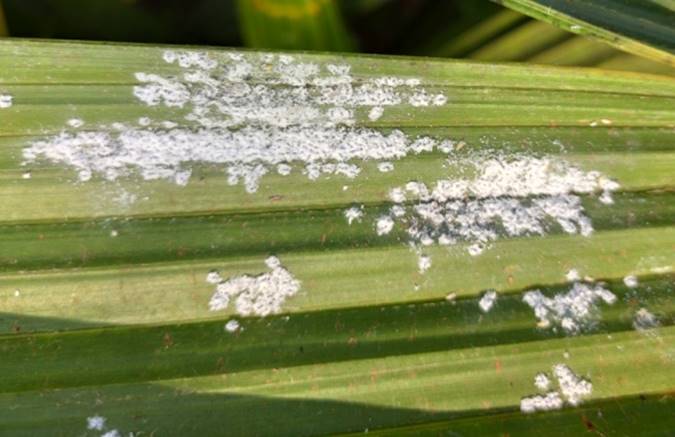
  • Aleurotrachelus atratus colony untidely grouped, except eggs, all the nymphal stages covered with wax.
  • Both nymphs and adults of Aleurotrachelus atratus damage plants directly by feeding on the under surface of the leaves.
  • The removal of sap reduces plant vigour, causes chlorosis or necrosis on the upper surfaces of infested fronds and premature leaf drop.
  • Indirect damage is caused by the excreted honeydew that serves as a medium for the growth of sooty moulds, which may hinder photosynthesis.
 
Infestation of Palm infesting whitefly


  • Eggs are stalked, initially creamy white and turn to dark brown before hatching. The first instars have four pairs of wax plumes excreted by glands at the base of dorsal setae.
  • Each dorsal seta has curving longitudinal grooves that guide the wax flakes as they are secreted from the seta base and all the nympal stages are black.
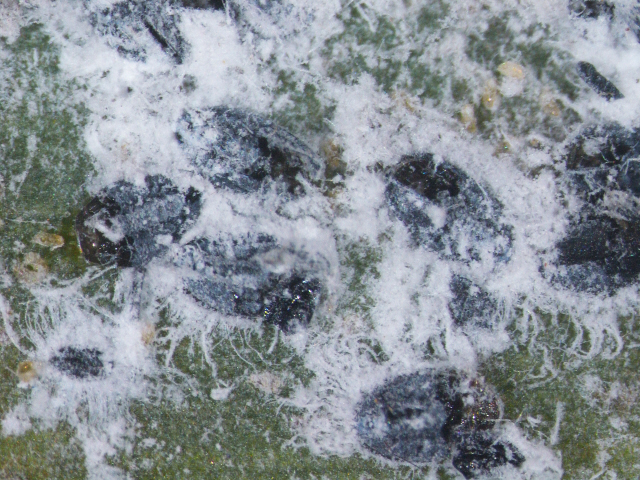
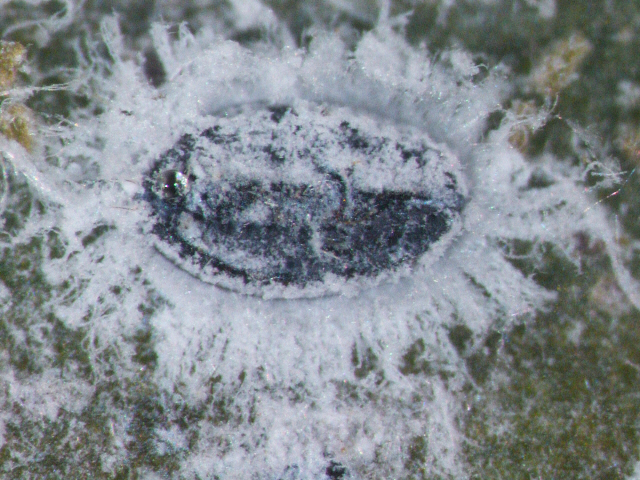
  • Puparia are elliptical, black, 1.0-1.1 mm long with a long marginal white wax fringe and dorsal wax filaments that often completely cover the insect. When the wax is removed, each puparium can be seen to have a distinct diagnostic pair of sub-marginal longitudinal cephalothoracic folds that extend into the abdomen.
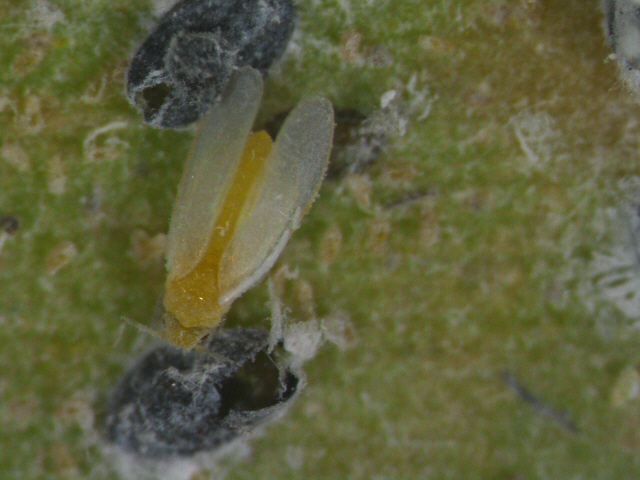
  • Adults differ from the recently invaded whiteflies infesting palms; smaller than Aleurodicus rugioperculatus but larger than P. bondari and P. minei and without any wavy marking on the wings.
 
Adult

 
Pupa

 
Pupae


  • Avoid transportation of coconut seedling or any other ornamental plants from pest infested areas.
  • nstallation of yellow sticky traps on the palm trunk to trap adult whiteflies.
  • Application of 1% starch solution on leaflets to flake out the sooty mould.
  • Under severe infestation condition and absence of natural parasitism, neem oil @ 1% may be applied.
  • Community based approach warranted for the effective management of this invasive pest.

Four species of predator’s viz., Dichochrysa astur, Cybochephalus spp, Chilocorus nigrita and Jauravia pallidula were found feeding on this invasive species.
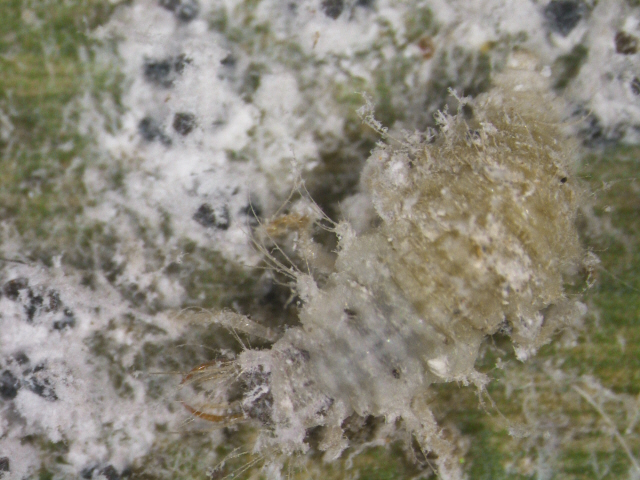
 
Dichochrysa astur


  1. Continuous monitoring on pest and natural enemies including natural parasitism if any.
  2. Foliar application (two sprays) of entomopathogenic fungus, Isaria fumosorosea @ 2 x 10⁸ spores/ml (5 g/litre of water) at 15 days intervals.