
ICAR - NATIONAL BUREAU OF AGRICULTURAL INSECT RESOURCES
BIPM IN COCONUT
Pest Name : Rugose spiralling whitefly
Aleurodicus rugioperculatus Martin
Rugose spiralling whitefly infestation was observed in several coconut palms in Pollachi, Coimbatore district in Tamil Nadu. Subsequently, its population increased greatly and spread across the coconut and banana growing regions. So far, incidence of RSW was confirmed in Tamil Nadu, Karnataka, Kerala, Andhra Pradesh and Assam. The dispersal mainly through transport of seedling and farm produce from infested areas.
RSW is a highly polyphagous pest reported to feed on about 30 plant species including economically important cultivated plants and palms in India. RSW found to feed on coconut, banana, mango, sapota, guava, cashew, ramphal, oil palm, maize, Indian almond, water apple, jack fruit, mango, guava, maize and many other ornamental plants like bottle palm, Indian shot, false bird of paradise, butterfly palm. Besides, few life stages of RSW were found on cocoa, citrus, jackfruit, Hibiscus, curry leaf, nutmag, Heliconia, sugarcane, and garden cordon which were noticed in severally infested coconut and banana garden.
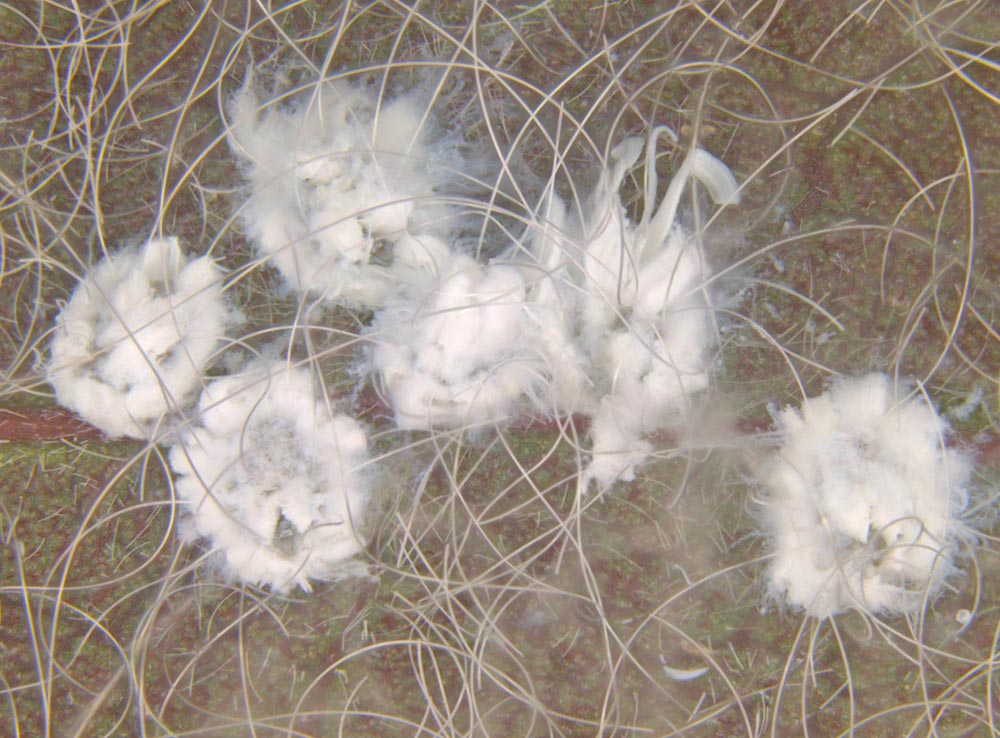
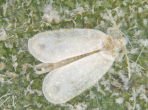
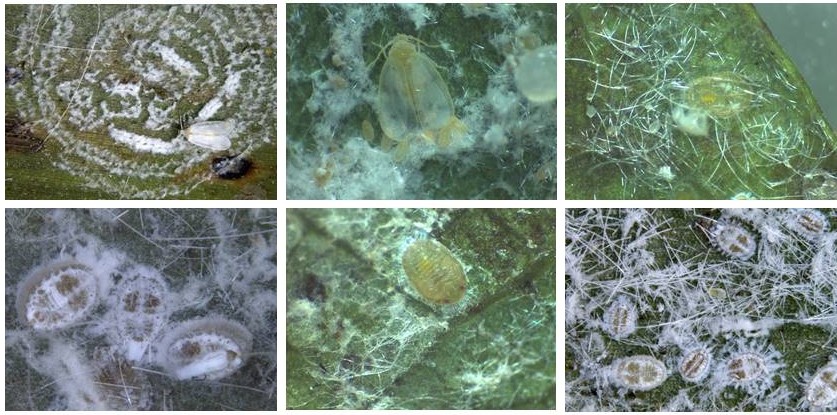
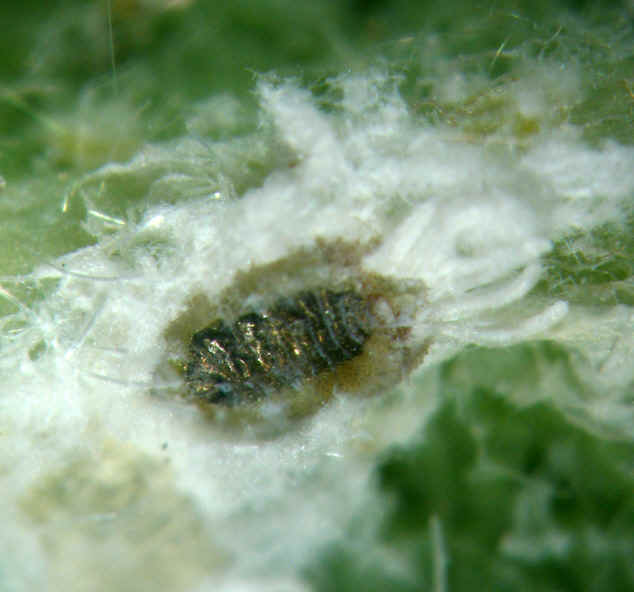
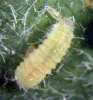
Colonies were in generally poor in condition with groups of woolly wax puparia untidily grouped under the leaves of the host. Females lay eggs on the underside of leaves in a concentric circular or spiral pattern and cover it with white waxy matter. Eggs are elliptical and creamy white to dark yellow in color. Crawlers molt into immature stages that are immobile, oval and flat initially but become more convex with the progression of its life cycle. The nymphs are light to golden yellow in color and will produce a dense, cottony wax as well as long, thin waxy filaments, which get denser over time. Nymphs possess a single fluff at posterior end. RSW adults can be distinguished by their large size and the presence of a pair or irregular light brown bands across the wings.
The pre-oviposition period is 2.7 days, life time fecundity 225.5±26 eggs on bird of paradise (Strelitzia nicolai). Adult longevity is 27.5±2.7 and 36.8±3.5 days for females and males, respectively.
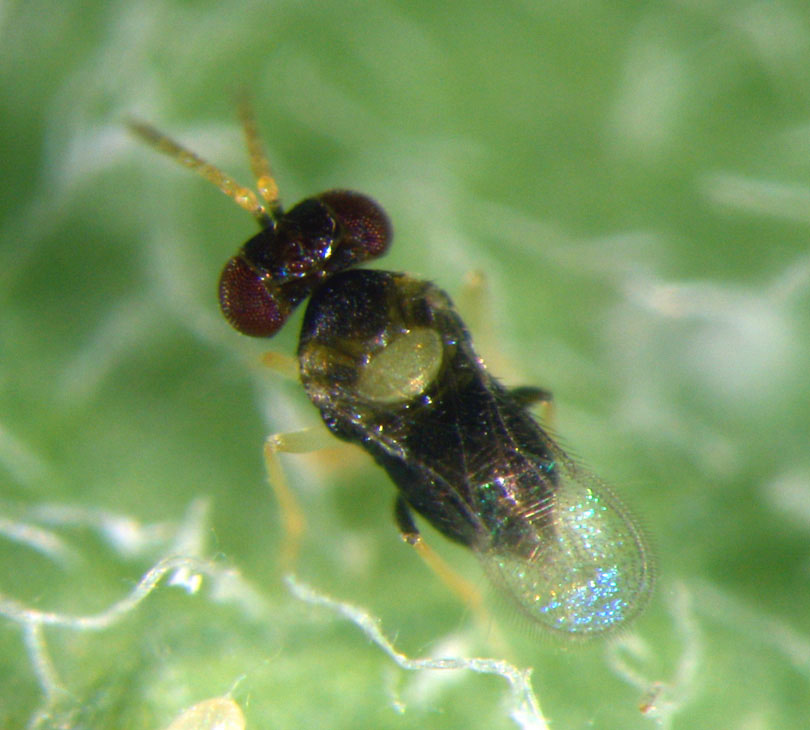
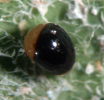
The most dominant and effective parasitoid, Encarsia guadeloupae, showed about 40-80% natural parasitism. Parasitized nymphs turn dark brown in colour and the adults emerge by cutting the circular lid at the thoracic region. Adults are very tiny, solitary wasp and can be identified by their yellow scutellum against their brownish body. Fortuitous introduction of E. guadeloupae along with A. dispersus into India during 1993 showed effective against RSW. Besides, green lacewing (Dichochrysa sp. nr. astur) and coccinellids (Cybocephalus sp. and Cheilomenes sexmaculata) were also associated with RSW colony.
Visitors :
Developed by: Dr. M. Pratheepa, Dr. K. Subaharn, Dr. Richa Varshney & Dr. T. Venkatesan
(c) ICAR-National Bureau of Agricultural Insect Resources.
