
ICAR - NATIONAL BUREAU OF AGRICULTURAL INSECT RESOURCES
BIPM IN COCONUT
Pest Name : Nesting whitefly
Nesting whitefly
Paraleyrodes minei Iaccarino
Nesting whitefly distributed in Karnataka, Kerala, Tamil Nadu, Andaman and Nicobar Islands. Dispersal is mostly through transportation of infested seedlings.
Paraleyrodes minei is found to colonize on coconut, guava and ornamental plant such as false bird of paradise, Plumeria alba, Annona squamosa, Ficus religiosa, Calophyllum inophyllum, Capsicum annuum, Thespesia populnea, Cestrum diurnum, Artabotrys odoratissimus, Mathuca longifolia, Roystonea regia, Elaeis guineensis, Dypsis lutescens, Argyrea cuneata, Strychnos nixvomica, Vitex altissima, Monihot esculenta, Santalum alum, Phyllanthus emblica, Manilkara zapota, Citrus spp. Hibiscus rosasinensis, Syzygium jambos.
Presence of woolly wax nests on abaxial palm leaflets. Paraleyrodes minei feeds from abaxial leaf surface and produces honeydew which in turns leads to sooty mould deposits interfering with photosynthetic efficiency of the palms.
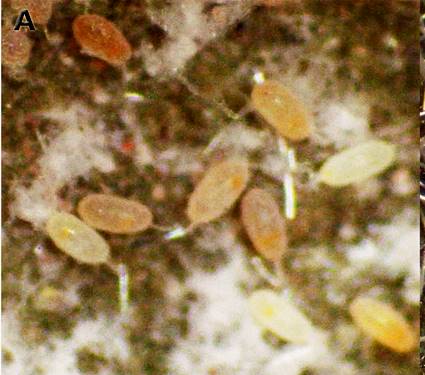
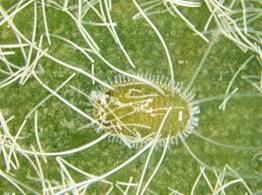
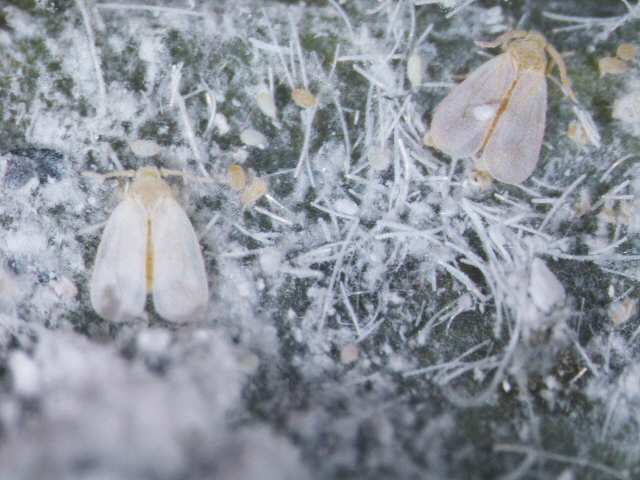
Some lady beetle grubs were recorded in our observations on P. minei infested coconut leaflets. No natural parasitism recorded so far from India.
Foliar application (Two sprays) of entomopathogenic fungus, Isaria fumosorosea @ 2 x 10⁸ spores/ml (5 g/litre of water) at 15 days intervals.
Visitors :
Developed by: Dr. M. Pratheepa, Dr. K. Subaharn, Dr. Richa Varshney & Dr. T. Venkatesan
(c) ICAR-National Bureau of Agricultural Insect Resources.
