Pest Name :  Bondars nesting whitefly


Bondar’s nesting whitefly


Paraleyrodes bondari Peracchi


Bondar’s nesting whitefly, Paraleyrodes bondari distributed in Kerala, Karnataka. Dispersal is mostly through transportation of infested seedlings.


The polyphagous nature of the non-native BNW has more than 25 susceptible host plants which include banana, avocado, citrus, cassava, custard apple, ornamental ficus in India.
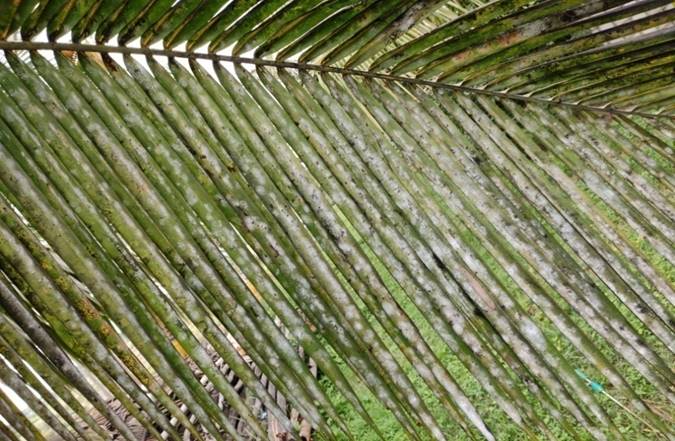
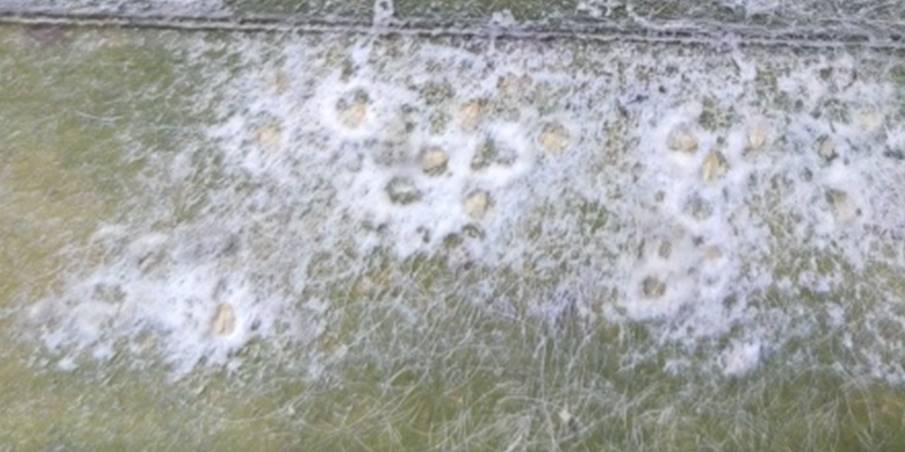
  • Excessive de-sapping by the adults and nymphs produces honey dew leading to deposits of sooty mould on plant surface which may affects the photosynthetic efficiency.
  • The feeding damage by Bondar’s nesting whitefly has not become as intense as that of rugose spiralling whitefly with minimum honey dew and sooty mould deposits recorded so far on palm leaflets.
  • It was reported that the co-existence with rugose spiralling whitefly on coconut palms infer simultaneous arrival of both these pests from New World region.
 
Colonizing of Bondars nesting whitefly

 
Infestation of Bondars nesting whitefly

 
Nesting of whitefly in coconut leaves


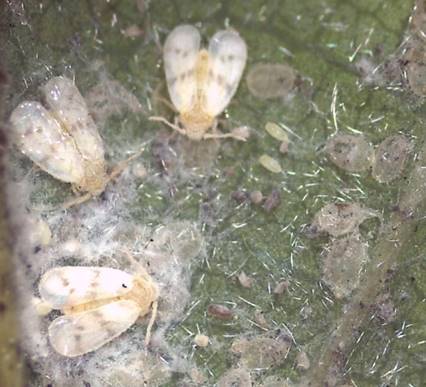
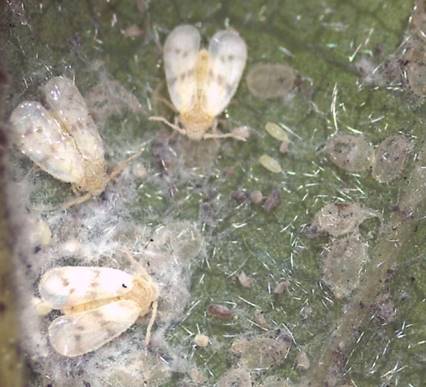
  • Presence of woolly wax nests on abaxial palm leaflets is one of the features for pest identification. Adult whitefly lays stalked eggs devoid of woolly wax coating and the nymphs are absolutely flat with well-developed fibreglass like projections from the dorsum.
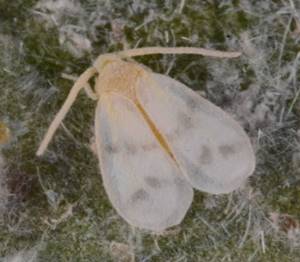
  • Occurrence of egg clusters, flat creamy yellow nymphs with prominent fibre glass strands from the dorsum and single thick flagellum, characteristic nest-like woolly wax around the pupa, and adults with oblique X-shaped grey bands on wings are some characteristic features for the identification.
  • Bondar’s nesting whitefly is usually confined to the abaxial surface of palm leaflets shying away from the sunlight on account of its photo-sensitiveness.
  • Nymphs are creamy yellow, transparent, oval shaped, absolutely flat up to 0.9 mm. The margin of the nymph is covered with a band of white wax and short setae are observed all around.
  • The male genitalia are characteristic with the apex of aedeagus possessing a single dorsal and ventral horn and a pair of apicolateral processes.
 
Bondars nesting whitefly colony

 
Adult


  • Continuous monitoring on pest and natural enemies including natural parasitism if any.
  • Avoid transportation of coconut seedling or any other ornamental plants from pest infested areas.
  • Installation of yellow sticky traps on the palm trunk to trap adult whiteflies.
  • Application of 1% starch solution on leaflets to flake out the sooty mould.
  • Under severe infestation condition and absence of natural parasitism, neem oil @ 1% may be applied.
  • Community based approach warranted for the effective management of this invasive pest.

Some grubs of coccinellid beetles were noticed around the Bondar’s nesting whitefly (BNW) colony; However, no parasitoid was recorded in India.


Foliar application (Two sprays) of entomopathogenic fungus, Isaria fumosorosea @ 2 x 10⁸ spores/ml (5 g/litre of water) at 15 days intervals.